Only 5.8% Inter-Caste Marriages: Endogamy, Khap Panchayats & Ambedkar’s Diagnosis
IHDS ke mutabik India me inter-caste unions sirf ~5.8% hain. Endogamy ka rule itna strong kyon hai? Ambedkar, khaan-panchayat control, aur Shakti Vahini verdict se samjho.
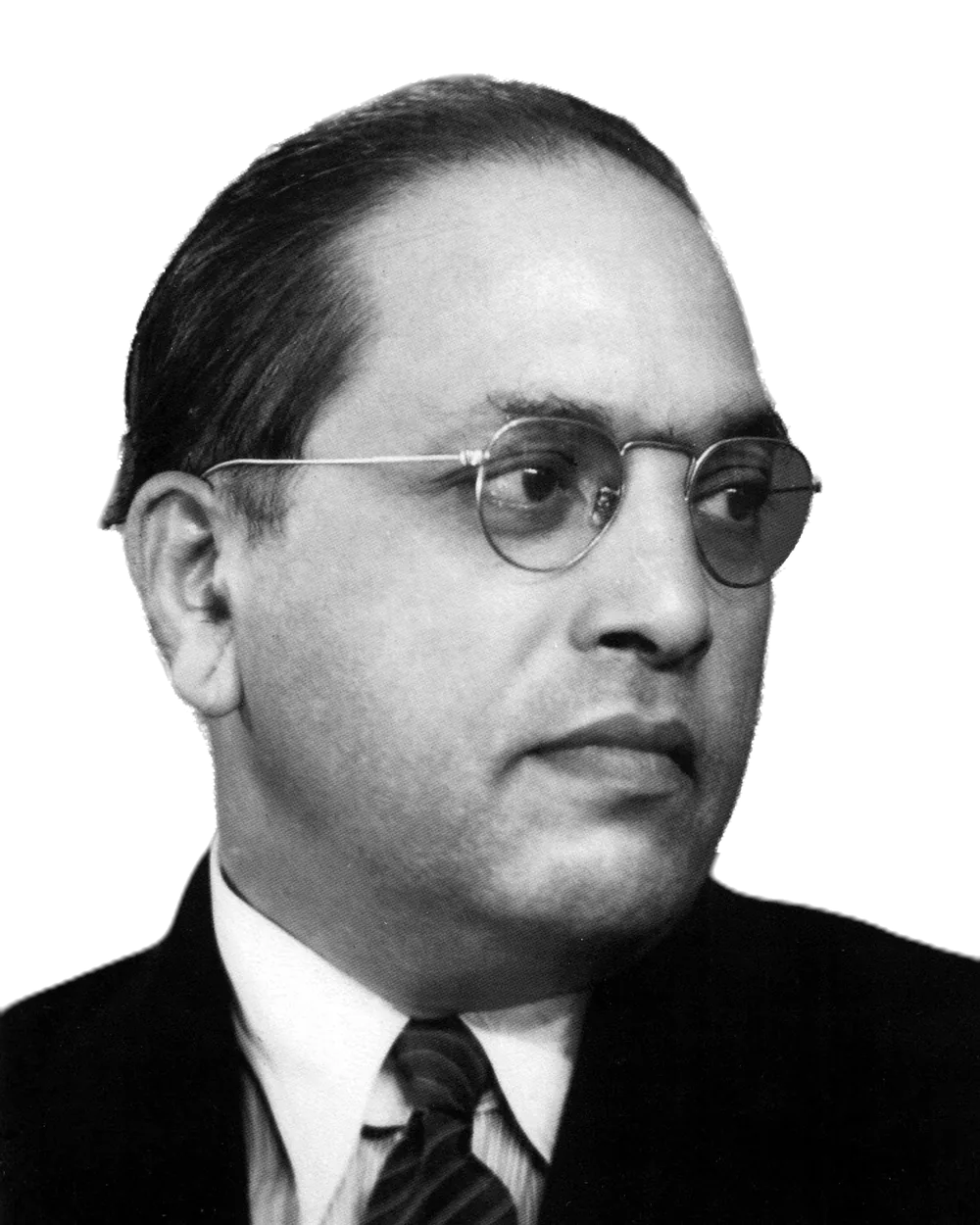
📑 Quick Jump: Contents (10) & Syllabus Chapters
Endogamy Itni Strong Kyon Hai?
India me marriage sirf personal choice nahi, balki kinship, caste hierarchy, property, honour aur community regulation ka social institution hai. Isliye inter-caste marriage ka question sociology me ek sensitive but central puzzle ban jata hai: agar constitutional equality, urbanization, education aur modern employment badh rahe hain, toh bhi inter-caste unions itne rare kyon hain? India Human Development Survey (IHDS) ke mutabik inter-caste marriages sirf lagbhag 5.8% hain—ye number batata hai ki caste endogamy ab bhi Indian society ka dominant marriage norm hai.
Is phenomenon ko samajhne ke liye Ambedkar ki diagnosis sabse important hai. Unke hisaab se caste ka real essence hierarchy nahi, balki endogamy hai. Caste society apni boundaries ko maintain karti hai by controlling marriage, sexuality, descent aur inheritance. Is view me marriage ek private act nahi, balki reproduction of social structure hai. Isi liye inter-caste marriage par resistance aksar sirf cultural discomfort nahi hota; ye social power, honor, land, lineage aur patriarchy ki protection bhi hoti hai.
Haryana jaise states me is issue ka ek aur intense form dikhta hai. Prem Chowdhry ki ethnographic studies ne dikhaya ki khap panchayats often gotra, village exogamy aur property interests ke naam par marriages regulate karti hain. Yahan endogamy ka matlab sirf caste within marriage nahi, balki kinship control ka broader regime bhi hai. Supreme Court ka Shakti Vahini case is context me landmark hai, kyunki court ne honour killings aur khap coercion ko unconstitutional declare karke state ko preventive duty di.
UPSC Sociology Optional ke liye ye topic isliye important hai kyunki isme caste, kinship, patriarchy, social change, law, social control aur modernization sab ek saath judte hain. Essay me bhi ye issue Indian society ke “deep structure” ko expose karta hai: legal equality ke bawajood social reproduction ka mechanism ab bhi kaafi powerful hai.
Thinkers: Endogamy Ko Kaun Kaise Samjhta Hai?
1) B.R. Ambedkar
Ambedkar ne caste ko mainly a system of graded inequality ke roop me nahi, balki a social order of regulated marriage aur exclusion ke roop me decode kiya. Unka famous insight tha ki caste survives through endogamy. Meaning: caste apni boundaries ko marriage ke through reproduce karti hai. Unki broader critique books jaise Annihilation of Caste aur essays on Hindu social order me milti hai. Ambedkar ke liye inter-caste marriage merely individual choice ka question nahi; ye caste structure ko challenge karne ka radical act hai.
2) M.N. Srinivas
Srinivas ne concepts like Sanskritization aur dominant caste ke through Indian social change ko explain kiya. Endogamy unke framework me social mobility aur status competition se linked ho sakti hai. Lekin unka model kuch extent tak aspirational change ko capture karta hai, while caste endogamy ke coercive dimensions ko fully foreground nahi karta. Isliye Ambedkar aur Srinivas ka contrast useful hai: ek structural domination par focus karta hai, doosra status mobility aur cultural imitation par.
3) Louis Dumont
Dumont ki classic Homo Hierarchicus caste ko primarily hierarchy and purity- pollution ke through understand karti hai. Endogamy is hierarchy ko maintain karne ka mechanism hai. Dumont ka strength ye hai ki wo caste ko moral-ritual order ke roop me samjhate hain. Lekin critique ye hai ki unka model power, political economy aur gender violence ko comparatively understate karta hai. Inter-caste marriage resistance ko sirf purity logic se samajhna incomplete hai; isme property aur patriarchy bhi involved hain.
4) Patricia Uberoi
Uberoi ne kinship, marriage aur family ko gendered institutions ke roop me study kiya. Unka contribution ye hai ki marriage ko private domestic unit nahi, balki social reproduction ka site dikhaya. Inter-caste marriage ko samajhne ke liye Uberoi important hain kyunki woh batati hain ki family, alliance aur descent systems social norms ko reproduce karte hain. Isse clear hota hai ki caste ka boundary maintenance kinship ideology ke through hota hai.
5) Prem Chowdhry
Prem Chowdhry ki Haryana par ethnographic work khap panchayats, gotra rules, honour violence aur rural power structures ko expose karti hai. Unki studies dikhati hain ki khaps sirf “traditional council” nahi, balki local dominance, landed interests aur patriarchal control ke institutions bhi ho sakti hain. They police marriages to preserve caste purity, village exogamy, and property relations. Unka work Ambedkar ki diagnosis ko ground-level empirical support deta hai.
Analytical Contrast
Ambedkar gives the deepest structural diagnosis: caste = endogamy. Dumont explains the normative hierarchy; Srinivas explains mobility and adaptation; Uberoi explains kinship and gendered reproduction; Chowdhry shows how these operate in actual rural institutions like khaps. In exam answers, this contrast helps you move from definition to mechanism to case study to critique—exactly what UPSC rewards.
| Aspect | Ambedkarian Reading | Kinship-Property Reading |
|---|---|---|
| Core idea | Caste survives through endogamy and exclusion. | Marriage norms protect lineage, land, gotra and local power. |
| Main focus | Structural domination and hierarchy. | Kinship regulation, property interests and patriarchal control. |
| Best thinker/case | B.R. Ambedkar, Annihilation of Caste. | Prem Chowdhry on Haryana khaps and gotra policing. |
| Policy implication | Promote inter-caste marriage as social reform. | Strengthen legal protection, anti-honour violence measures and local accountability. |
Indian Data, Cases Aur Legal Evidence
IHDS data ka sabse cited finding ye hai ki India me inter-caste marriages ki share lagbhag 5.8% hai. Ye statistic na sirf caste persistence dikhaata hai, balki yeh bhi batata hai ki education aur urbanization ke bawajood marriage market ab bhi heavily endogamous hai. Iska practical meaning hai ki caste boundaries daily life me sabse zyada intimate institution—marriage—ke through reproduce hoti hain.
Legal sphere me Supreme Court ka Shakti Vahini v. Union of India (2018) bahut important hai. Court ne honour killings, khap coercion aur marriage choice par unlawful interference ko constitutionally impermissible mana. Court ne state ko preventive, protective aur punitive steps lene ka direction diya. Ye judgment sociology ke perspective se important hai kyunki isne recognize kiya ki social sanctions aur extra-legal authority marriage choices ko distort karte hain.
Prem Chowdhry ki Haryana-based ethnographic studies ne dikhaya ki khap panchayats gotra aur village exogamy ke naam par marriages ko regulate karti rahi hain. Yahan issue sirf “custom” ka nahi, balki local domination aur property transmission ka bhi hai. Rural North India me inter-caste ya inter-gotra marriages often lineage purity aur inheritance patterns ke against perceive ki jati hain.
Is topic ko Indian context me broader social indicators se bhi link kar sakte hain. NCRB ki crime data me honour-related violence ka direct national category limited ho sakta hai, but reports and court cases indicate continued vulnerability. NFHS-5 family structure, age at marriage aur social norms ka indirect evidence deti hai; it shows that marriage remains early, regulated, and socially embedded. PLFS se women’s labour force participation aur economic dependence ka context milta hai, jo marital choice par family control ko reinforce kar sakta hai.
Real cases me Khap-driven threats from Haryana, Rajasthan aur western UP repeatedly reported hue hain; many cases me couples ko police protection, shelter homes aur court intervention ki zarurat padti hai. This shows that legal permission alone is insufficient unless social legitimacy changes. Isliye sociology me data aur cases dono ko jodna zaroori hai: low inter-caste marriage rate, coercive local institutions, aur court-led rights protection—teenon milkar Indian endogamy system ka empirical map banate hain.
🔑 Endogamy
Aisa marriage rule jisme spouse ko apni caste/community ke andar choose kiya jata hai; ye caste hierarchy ko reproduce karta hai.
Limitations Aur Nuanced Synthesis
Sirf Ambedkar ko cite karke answer complete nahi hota. Ek limitation ye hai ki endogamy ko purely “traditional backwardness” bol dena oversimplification hai. Kuch cases me caste endogamy status anxiety, social capital, economic security aur family strategy se bhi driven hoti hai. Isliye economic sociology aur kinship studies ka use karna chahiye.
Second, inter-caste marriage ka low percentage homogeneously sab states, classes aur regions me same nahi hai. Urban middle classes, higher education, migration aur inter-mixing se probability badh sakti hai. Isliye pan-India average ko absolute truth na banayein; regional variation ko note karein. Third, women’s agency ko underplay nahi karna chahiye. Many marriages are resisted because families fear not only caste mixing but also women’s autonomous partner choice. So the issue is caste plus patriarchy, not caste alone.
Counter-thinkers me Dumont useful hai because he foregrounds purity-pollution, but his model power dynamics ko understate karta hai. Srinivas change ko explain karta hai, but coercion ko less central banata hai. Uberoi aur Chowdhry gendered kinship aur local control ko better capture karti hain. Best synthesis ye hai: caste endogamy is simultaneously a ritual norm, a power strategy, a gender regime, aur an inheritance system.
UPSC ke liye strongest answer tab banta hai jab aap structural explanation + empirical data + legal case + sociological critique ko combine karein. Isse answer moral sermon se hatkar analytical sociology ban jata hai.
Answer kaise likhein
- IHDS ka ~5.8% data show karta hai ki inter-caste marriage India me ab bhi exception hai, rule nahi.
- Ambedkar ke अनुसार caste ki real mechanism endogamy hai; isliye marriage social reproduction ka core site hai.
- Haryana khaps aur Prem Chowdhry ki studies demonstrate karti hain ki kinship, gotra aur property policing se coercion hota hai.
- Shakti Vahini judgment state ko protect karne ka constitutional duty deta hai; legal reform ke bina social change incomplete hai.
Is Blog Se Jude Syllabus Chapters
Every Unit Note + Topic-Wise PYQ Mapped (English + Hinglish)
Paper 1 (10 Units) aur Paper 2 (15 Units) — Complete structured notes, thinkers, mind maps & 597 solved PYQs ek saath.
Khud ko test karo
Is post se 3 sawal
0 / 3 attempted
1. Which thinker most directly argued that caste survives through endogamy?
2. Shakti Vahini v. Union of India is primarily associated with:
3. Prem Chowdhry’s studies of Haryana are best used to show:
FAQ
Aksar poochhe jaane wale sawaal
- Ambedkar ne caste aur marriage ko kaise link kiya?
- Unhone kaha caste ka survival endogamy par depend karta hai; marriage boundaries caste ko reproduce karti hain.
- Shakti Vahini case ka sociology relevance kya hai?
- Isne honour killings aur khap coercion ko unconstitutional mana, showing that social control can violate individual choice.
- Prem Chowdhry ke work ka key contribution kya hai?
- Unhone Haryana me khap panchayats ke gotra, village exogamy aur property policing ko ethnographically expose kiya.
UPSC PYQs
Is topic ke Previous Year Questions
- 2024 · P2
Why is the study of marriage important in Sociology? Analyse the implications of changing marriage patterns for Indian society. (20 marks)
- 2024 · P2
What, according to you, are the factors responsible for the continuance of the caste system in modern India? (20 marks)
- 2023 · P2
Analyse the differences between the attributional and interactional approaches in studying the caste system. (10 marks)
- 2021 · P2
Critically examine whether the Indian joint family is disintegrating or adapting into 'functional jointness' (I.P. Desai, Milton Singer). (20 marks)
Roz ke Sociology notes Telegram pe paao
Daily current affairs, PYQ linkages aur direct mentorship support Telegram par.
Related
Aur padho
- Paper 2 IndiaOWL BLOGP2
Caste System in India for UPSC Sociology: Purity-Pollution, Dominant Caste, Sanskritisation & Dalit Capitalism
4 min readCaste System in India for UPSC Sociology: Purity-Pollution, Dominant Caste, Sanskritisation & Dalit Capitalism
If you are aiming for 300+ in UPSC Sociology Optional, mastering Paper 2 — Unit 4 (Caste System) is non-negotiable. Every year, UPSC tests your ability to connect classical Indological theories with contemporary realities like...
Padho → - Paper 2 IndiaOWL BLOGP2
Patriarchy, Family & Marriage in India: Live-in Relationships, Son Meta-Preference & Feminisation of Agriculture
4 min readPatriarchy, Family & Marriage in India: Live-in Relationships, Son Meta-Preference & Feminisation of Agriculture
Indian kinship is undergoing a silent churn—caught between neo-local urban aspirations and resilient caste-gender hierarchies. When analyzing patriarchy, changing family, marriage in India for UPSC sociology, aspirants must move beyond...
Padho → 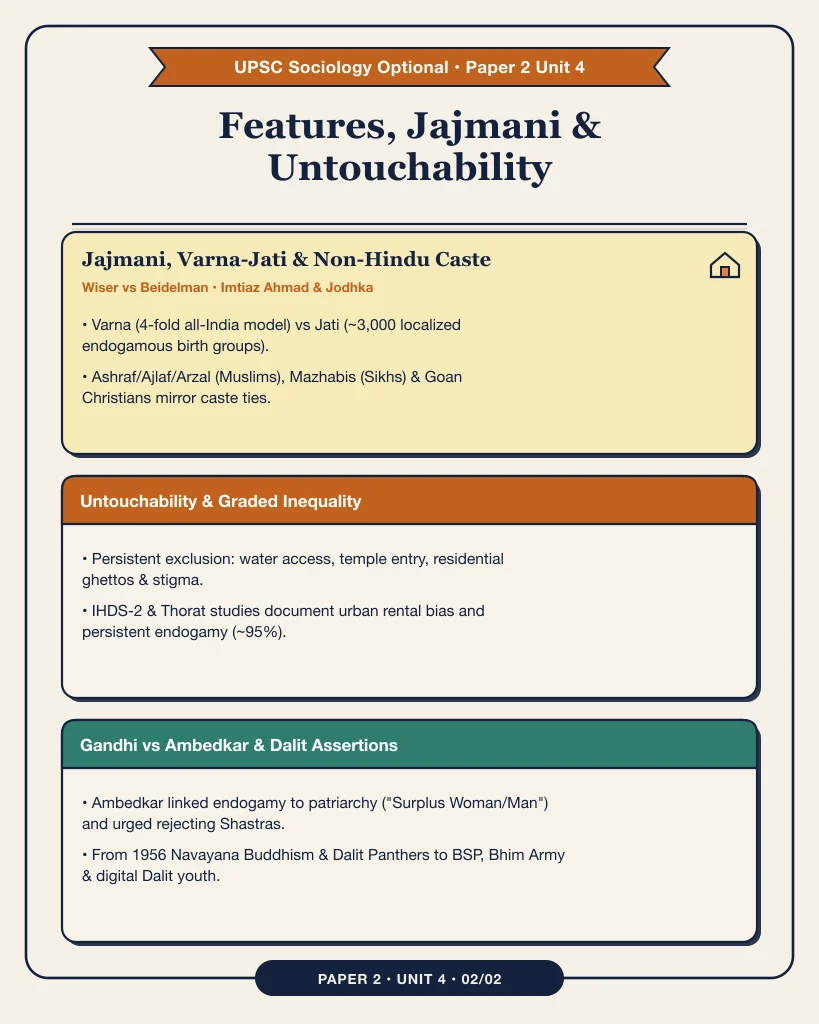 Paper 2 India1 min read
B. R. Ambedkar: Graded Inequality aur Annihilation of Caste (Paper 2)
Caste par B. R. Ambedkar aur Mahatma Gandhi / Dumont ke views ka comparison, Graded Inequality aur Endogamy ka analysis — UPSC Paper 2 notes.
Padho →