Caste Census, Creamy Layer aur Caste-Class Nexus: UPSC Paper 2 Linkages
Bihar caste survey aur sub-categorization debates ko Andre Beteille, M. N. Srinivas, Dipankar Gupta aur Rajni Kothari ke concepts se kaise jodein?
Current Context: Data vs Identity Debate
Haal hi ke Bihar Caste Survey aur Supreme Court ke SC/ST sub-categorization faislon ne ek purana sociological sawaal zinda kar diya hai: kya modern India mein caste class mein badal rahi hai, ya class boundaries aaj bhi caste ke aas-paas ghoomti hain?
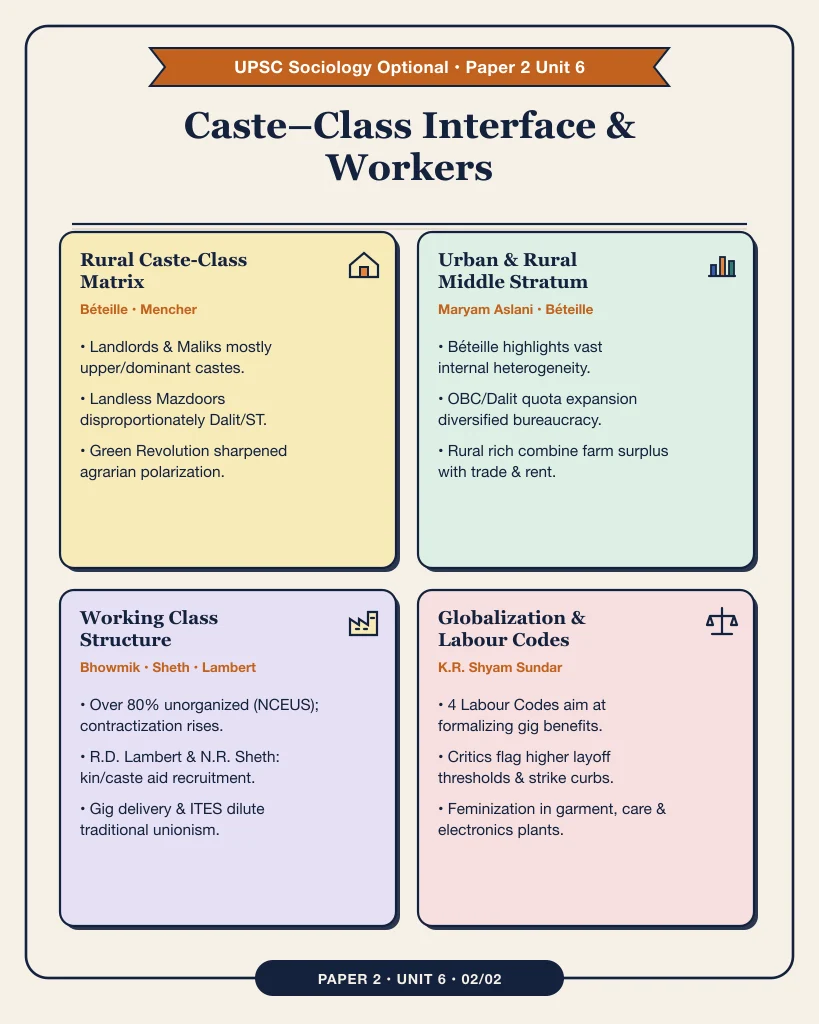
- Andre Béteille (Sripuram, 1965): Village level par power aur wealth ab sirf Brahmin monopoly nahi rahi — caste, class aur power alag dimensions ban rahe hain (Dispersed Inequality).
- Anil Bhatt & Satish Deshpande: Macro data (higher education, corporate ownership, land holdings) dikhata hai ki caste aur class abhi bhi high correlation rakhte hain, khaas kar informal sector mein.
| Aspect | Pro-Caste Enumeration View | Cautious / Anti-Enumeration View |
|---|---|---|
| Data need | Evidence-based affirmative action (Deshpande) | Fear of freezing fluid Jati identities (Ghurye) |
| Inequality focus | Exposes intra-OBC / intra-SC disparities | Could trigger competitive caste mobilization |
De-Sanskritization aur Middle-Class Dynamics
Yogendra Singh ke mutabik India mein Modernization of Tradition hua hai — caste khatam hone ke bajay Caste Associations, matrimonial sites aur electoral coalitions ke roop mein modernize ho gayi hai. Dominant agrarian castes (Maratha, Patidar, Kapu) jab backward status ki maang karti hain, toh yeh agrarian crisis aur De-Sanskritization ko dikhata hai.
Answer kaise likhein
- Frame the shift using André Béteille’s Caste, Class and Power and Rajni Kothari’s Politicization of Caste.
- Include Dipankar Gupta (identity without hierarchy) and Yogendra Singh (modernization of caste associations).
- Address intra-category inequalities (Rohini Commission / sub-categorization) using empirical sociological rationale.
Khud ko test karo
Is post se 3 sawal
0 / 3 attempted
1. Tanjore ke Sripuram gaon mein Caste, Class aur Power ka shift kis sociologist ne study kiya?
2. "Politicization of Caste" par classic work kis political sociologist ne likha?
3. Caste boundaries strong hone par vertical ritual hierarchy kamzor hone ko Dipankar Gupta kya kehte hain?
FAQ
Aksar poochhe jaane wale sawaal
- Andre Béteille ne Sripuram village study mein Caste, Class aur Power ke baare mein kya dikhaya?
- Béteille ne dikhaya ki pehle Caste, Class aur Power ek saath overlap karte the (Cumulative Inequality), par democracy aur land reforms ke baad yeh teeno alag hone lage hain (Dispersed Inequality).
- Dipankar Gupta ka "Caste Identity without Hierarchy" kya kehta hai?
- Gupta ke mutabik ritual purity-pollution kamzor hui hai, lekin caste as an identity aur political mobilization pehle se zyada strong hui hai.
- Kya Caste Census casteism ko badhayega ya social justice ke liye zaroori hai?
- Critics (e.g. G. S. Ghurye style integrationists) maante hain ki counting se caste identity harden hoti hai; jabki proponents (e.g. Satish Deshpande, Ambedkarite scholars) kehte hain bina empirical data ke targeted welfare aur creamy-layer policy nahi ban sakti.
UPSC PYQs
Is topic ke Previous Year Questions
- 2023 · P2
Elaborate the salient features and the role of the middle class in India's democracy and development. (20 marks)
- 2023 · P2
Contextualize Louis Dumont's concept of 'binary opposition' with reference to the caste system in India. (10 marks)
- 2022 · P2
In the context of the changing Indian society, how do you view André Béteille's conceptions of harmonic and disharmonic social structures? (10 marks)
- 2021 · P2
Why does upward socio-economic mobility among Dalits and OBCs often trigger violent backlash from dominant agrarian castes? Examine. (20 marks)
Roz ke Sociology notes Telegram pe paao
Daily current affairs, PYQ linkages aur direct mentorship support Telegram par.
Related
Aur padho
 Thinkers2 min read
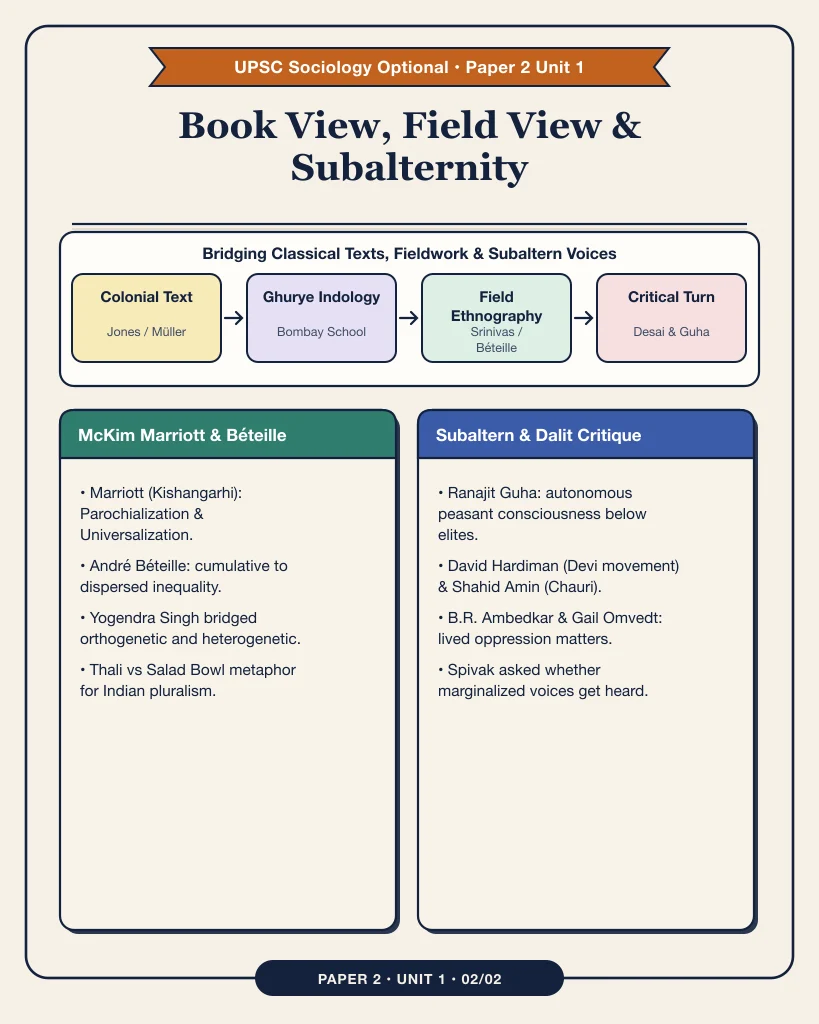
M. N. Srinivas: Sanskritization, Dominant Caste aur Field View
M. N. Srinivas ke field view, Sanskritization, Westernization aur Dominant Caste concepts ko UPSC Paper 2 answer writing ke liye detail mein samjho.
Padho →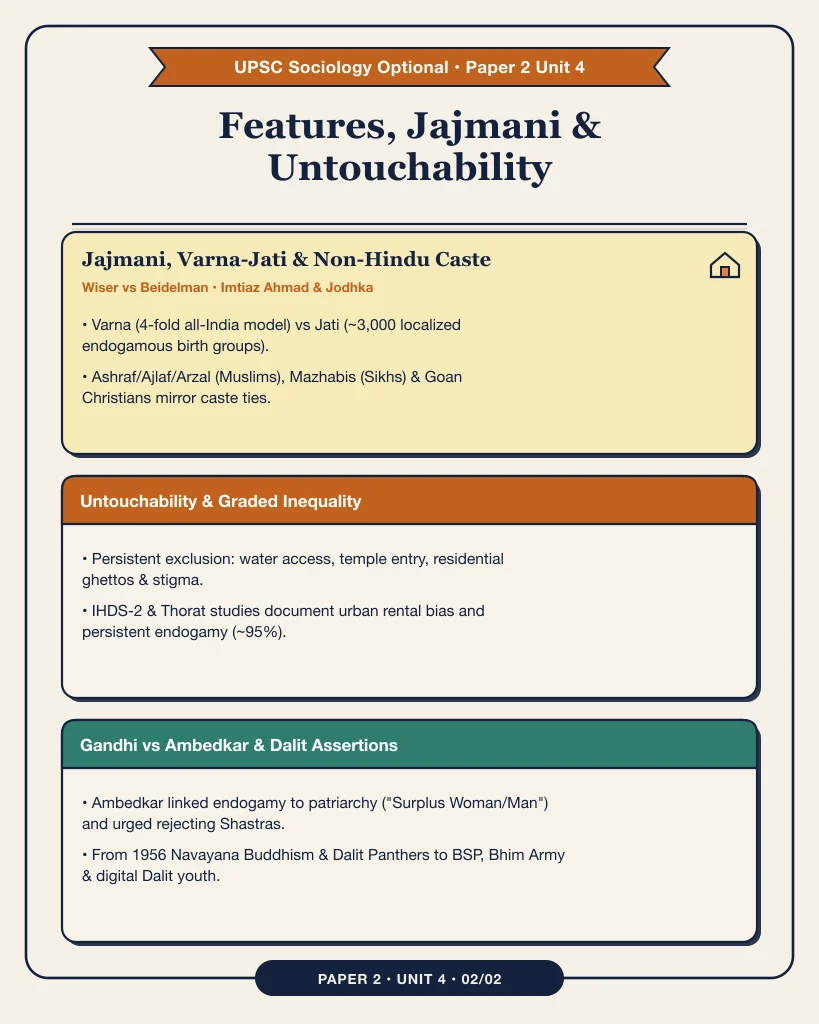 Paper 2 India1 min read
B. R. Ambedkar: Graded Inequality aur Annihilation of Caste (Paper 2)
Caste par B. R. Ambedkar aur Mahatma Gandhi / Dumont ke views ka comparison, Graded Inequality aur Endogamy ka analysis — UPSC Paper 2 notes.
Padho →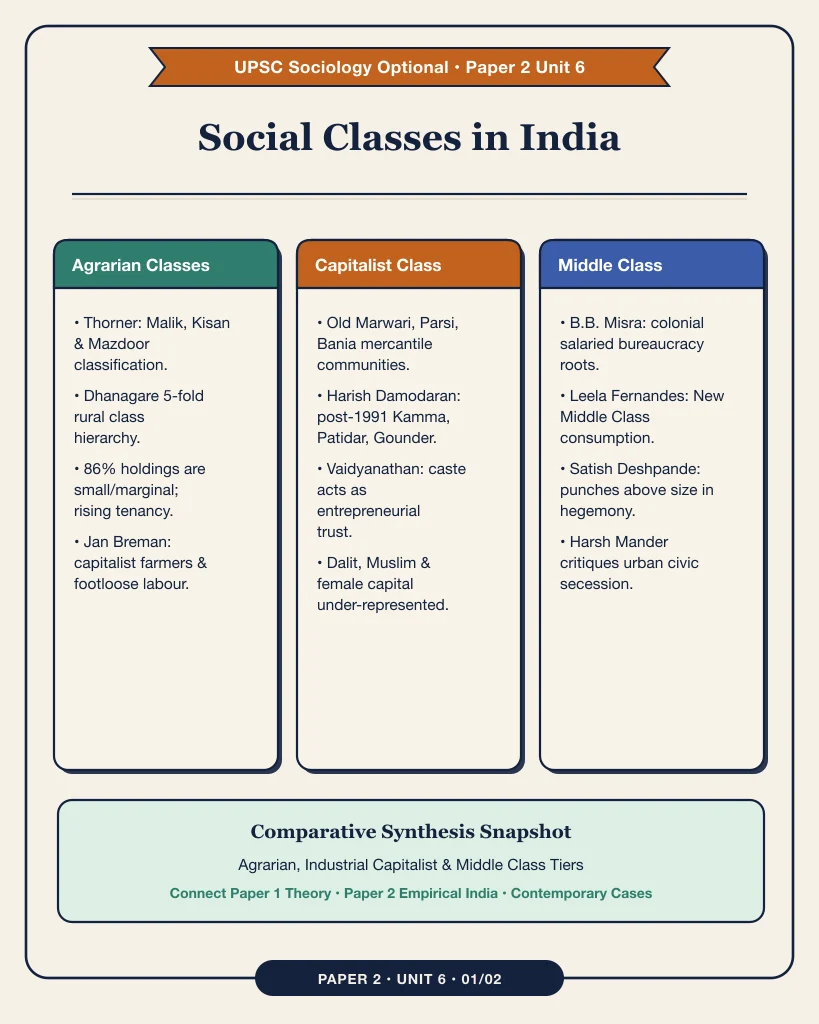 Paper 2 India2 min read
Indian Middle Class ka Rise: Consumerism, Caste Privilege aur Social Mobility
Naya Indian middle class kitna meritocratic hai? Satish Deshpande, André Béteille, Leela Fernandes aur Dipankar Gupta ke lenses se Paper 2 analysis.
Padho →