M. N. Srinivas: Sanskritization, Dominant Caste aur Field View
M. N. Srinivas ke field view, Sanskritization, Westernization aur Dominant Caste concepts ko UPSC Paper 2 answer writing ke liye detail mein samjho.
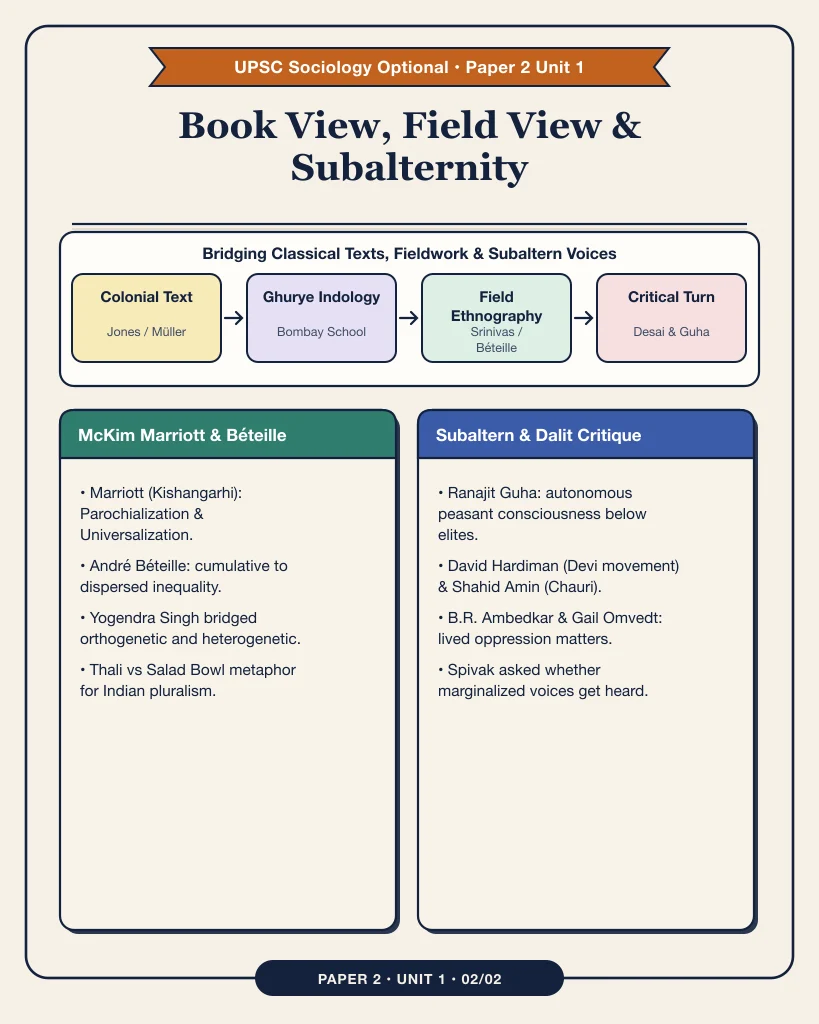
Book View se Field View ki yatra
British colonial writings aur early Indology ne Indian village ko ek unchanging little republic aur caste ko ek rigid, frozen hierarchy bataya tha. M. N. Srinivas ne Radcliffe-Brown aur Evans-Pritchard ke structural-functionalism ko apnate hue participant observation par zor diya.
- Coorgs study (1952): Karnataka ke Coorgs par unki monograph Religion and Society Among the Coorgs of South India ne Sanskritization ka base rakha.
- Rampura study: The Remembered Village (1976) mein unhone dikhaya ki kaise local agrarian economy, landownership aur factional politics gaon ki power decide karti hai.
| Aspect | Book View (Indology) | Field View (Srinivas) |
|---|---|---|
| Source of data | Vedas, Manusmriti, classical texts | Ethnography & village fieldwork |
| View of caste | Rigid Varna hierarchy | Fluid local Jati dynamics |
| Key limitation | Upper-caste textual bias | Micro-focus can miss macro history |
Sanskritization vs Westernization
Srinivas ke mutabik jab koi lower ya middle jati apni status badhane ke liye kisi higher caste (aksar local dominant caste) ke rituals, vegetarianism, ya lifestyle ko adopt karti hai, toh use Sanskritization kehte hain. Iske ulta, Westernization British rule ke baad aaye modern values, education, secular law aur technology ke impact ko dikhata hai.
- De-Sanskritization: Aaj ke India mein kai dominant castes reservation benefits paane ke liye OBC ya lower ritual status claim kar rahi hain — UPSC mein is contemporary twist ko zaroor likhna chahiye.
🔑 Dominant Caste & Vote Bank
Wo caste jiske paas numerical strength, cultivable land aur local political power teeno hon (jaise Patidar, Maratha, Jat, Lingayat). Yeh local patronage ke zariye elections mein Vote Bank control karti hai.
Answer kaise likhein
- Define Sanskritization as positional mobility within the Jati framework (Coorgs study, 1952) and link Dominant Caste to land + numbers (Rampura).
- Add critiques: Yogendra Singh pointed out structural limitations; feminist & Dalit scholars noted neglect of gender and anti-caste assertions.
- Connect to current India: Patidar/Maratha/Jat quota agitations (De-Sanskritization) and Panchayati Raj local politics.
Khud ko test karo
Is post se 3 sawal
0 / 3 attempted
1. M. N. Srinivas ke mutabik Sanskritization kis tarah ka change laata hai?
2. Rampura village study mein Srinivas ne kaun sa concept empirical roop se develop kiya?
3. Srinivas ke Field View par Sabse bada critique kisne diya ki woh upper-caste perspective par zyada focus karta hai?
FAQ
Aksar poochhe jaane wale sawaal
- Book View aur Field View mein kya farq hai?
- Book View (G. S. Ghurye, Louis Dumont) dharmashastras aur texts ke aadhar par Indian society ko samajhta hai, jabki Srinivas ka Field View Rampura aur Coorg jaise villages ke participant observation se real lived reality dikhata hai.
- Kya Sanskritization se caste structure badalta hai?
- Nahi. Srinivas ke mutabik Sanskritization sirf positional change laata hai, structural change nahi — yaani koi caste hierarchy mein thoda upar ja sakti hai par poora caste system bana rehta hai.
- Dominant Caste ke 3 main criteria kya hain?
- Numerical strength (badi population), economic and political power (zameen aur local politics par pakad), aur local hierarchy mein non-low ritual status.
UPSC PYQs
Is topic ke Previous Year Questions
- 2024 · P2
“The decade of 1950s was the golden period of village studies in Indian Sociology.” Explain. (20 marks)
- 2023 · P2
Contextualize Louis Dumont's concept of 'binary opposition' with reference to the caste system in India. (10 marks)
- 2023 · P2
Do you agree with the view of André Béteille that India’s villages are representative of Indian society’s basic civilizational values? Present a sociological overview. (20 marks)
- 2022 · P2
In the context of the changing Indian society, how do you view André Béteille's conceptions of harmonic and disharmonic social structures? (10 marks)
Roz ke Sociology notes Telegram pe paao
Daily current affairs, PYQ linkages aur direct mentorship support Telegram par.
Related
Aur padho
 Paper 2 India1 min read
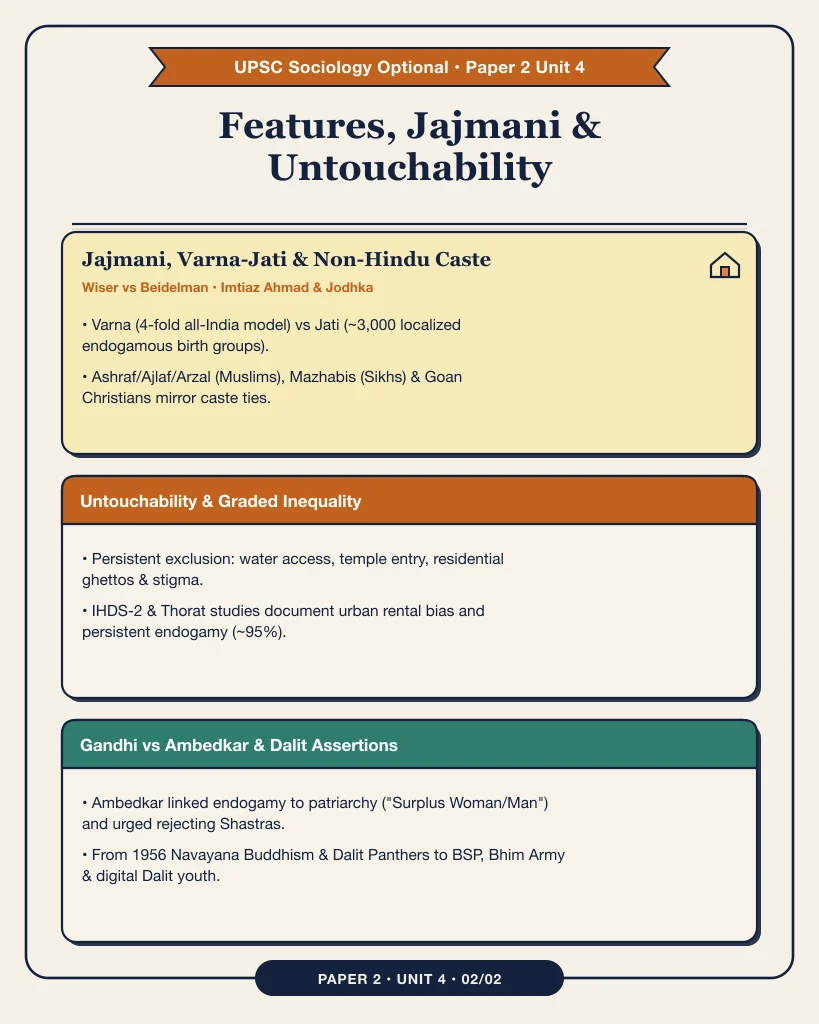
B. R. Ambedkar: Graded Inequality aur Annihilation of Caste (Paper 2)
Caste par B. R. Ambedkar aur Mahatma Gandhi / Dumont ke views ka comparison, Graded Inequality aur Endogamy ka analysis — UPSC Paper 2 notes.
Padho →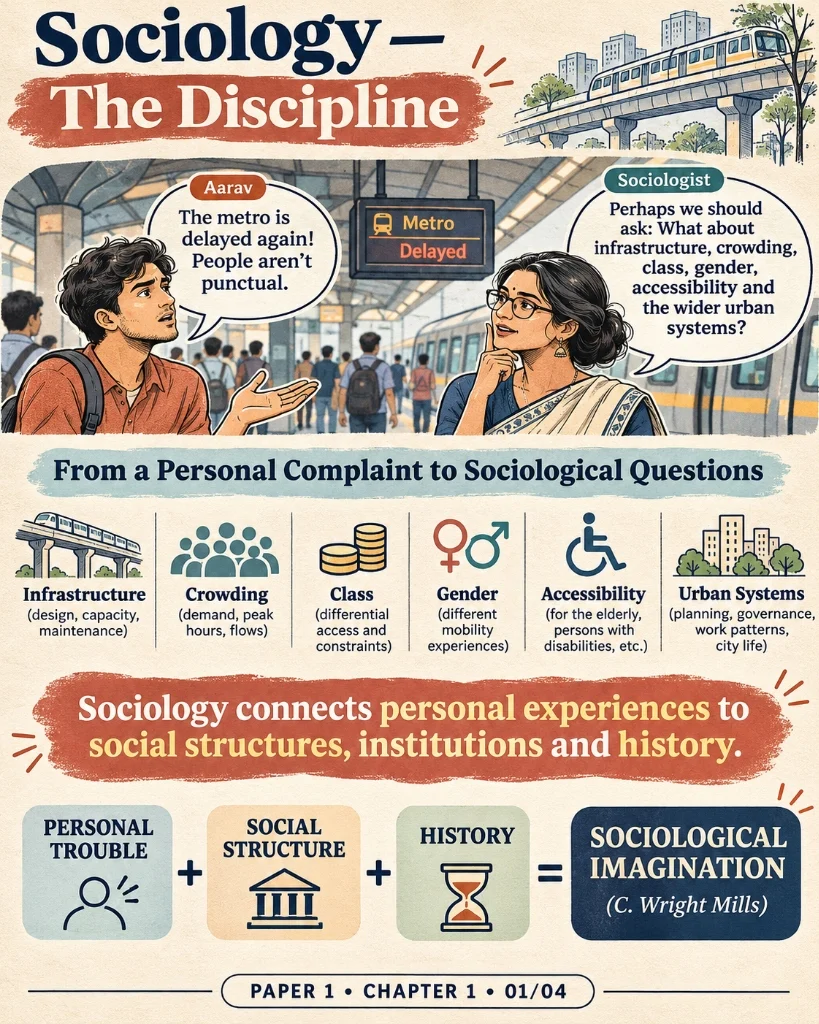 Answer Writing2 min read
UPSC Sociology Mains mein 300+ Marks Kaise Laayein: Complete Answer Framework
10-marker aur 20-marker Sociology answers ka exact structure: sociological jargon, P1-P2 interlinking, thinkers, current affairs aur visual diagrams.
Padho →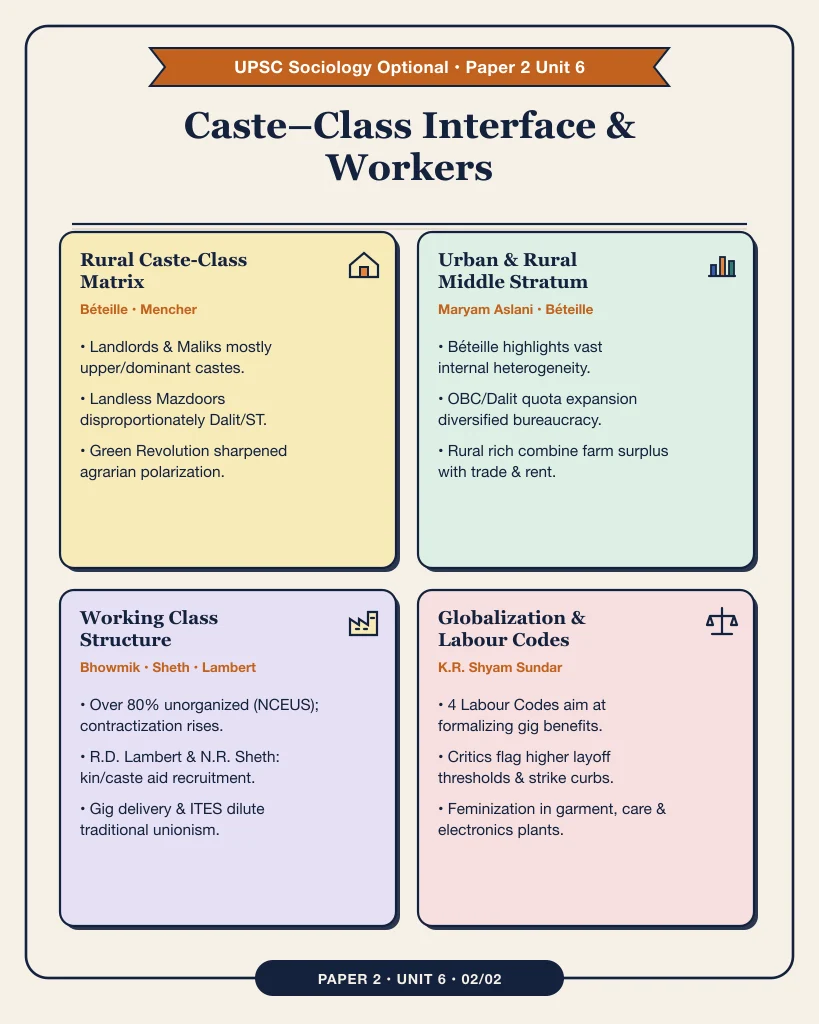 Current Affairs Link2 min read
Caste Census, Creamy Layer aur Caste-Class Nexus: UPSC Paper 2 Linkages
Bihar caste survey aur sub-categorization debates ko Andre Beteille, M. N. Srinivas, Dipankar Gupta aur Rajni Kothari ke concepts se kaise jodein?
Padho →