Formal vs Informal Work: Keith Hart, Jan Breman & India’s 90% Informal Labour
India ka labour market paradox: 90%+ workers informal hain, par gig/platform work “new age” lagta hai. Keith Hart, Jan Breman aur Guy Standing ke lens se understand karo ki informality ka future kya hai.
📑 Quick Jump: Contents (4) & Syllabus Chapters
Formal vs Informal Work: India ka Labour Paradox
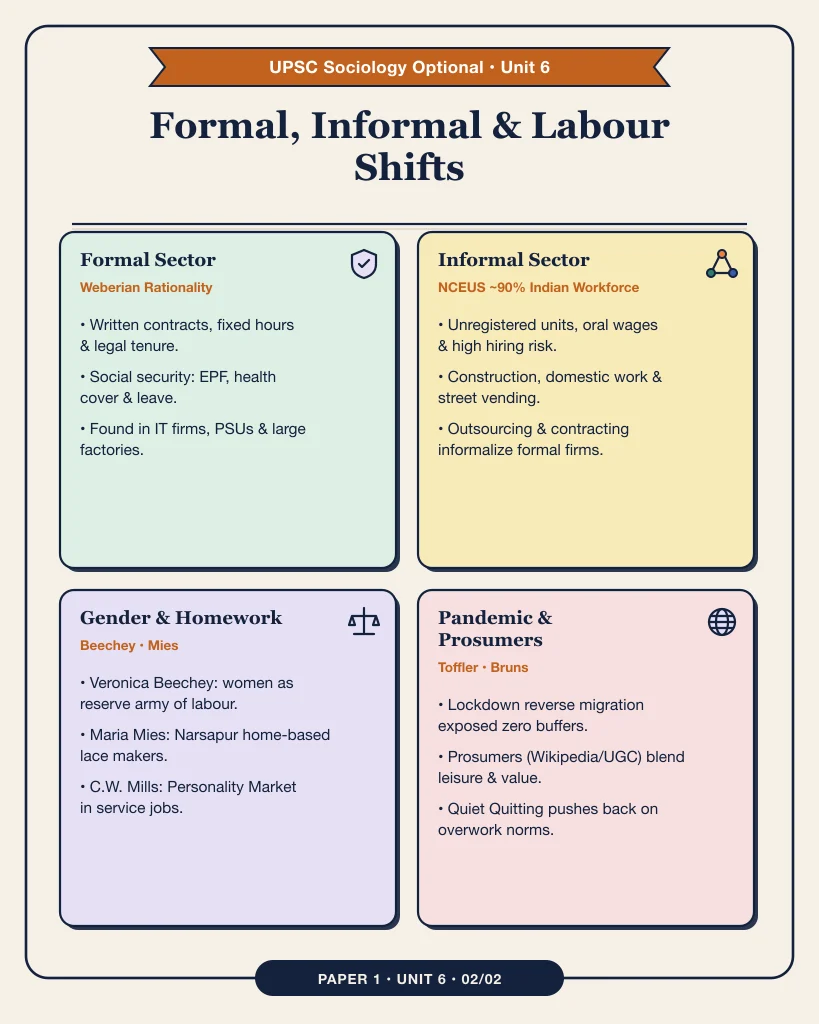
Formal aur informal work ka debate sirf job security ka issue nahi hai; yeh state, capital aur citizenship ke beech power relation ko expose karta hai. Keith Hart ne 1970s me “informal sector” term popular kiya, jab unhone Ghana ke urban labour market me dekha ki kaafi work state-regulated wage employment ke bahar ho raha hai. India me yeh debate aur zyada important hai, kyunki labour market ka bulk aaj bhi informality par based hai. PLFS aur NCEUS ke estimates repeatedly dikhate hain ki 90%+ workforce informal hai—matlab majority workers ke paas written contract, social security, paid leave ya stable wage protection nahi hai.
Yeh puzzle sirf rural labour tak limited nahi hai. Urban construction workers, street vendors, domestic workers, home-based workers, delivery riders, app-based drivers aur platform workers bhi isi continuum ka part hain. Isliye informal work ko “low skill” ya “temporary” kehna misleading hai. Jan Breman ne dikhaya ki footloose labour ka matlab movement without mobility hota hai—worker gaon se shehar, construction site se another site, ya seasonal migration se ek uncertain livelihood cycle me phans jata hai. Guy Standing ne ise precariat ke roop me theorise kiya: ek aisi class jo labour market me insecure, socially fragile aur politically under-represented hai.
India me formal-informal divide ab binary nahi, ek spectrum hai. Aaj kuch formal firms bhi outsourcing aur contractualization ke through informal labour use karti hain. Gig economy isko aur visible banati hai: NITI Aayog ke estimate ke according 23.5 million gig workers hain, aur yeh number aage aur badhne ki संभावना है. Rajasthan aur Karnataka ke platform workers bills ne state level response dikhaya ki regulation sirf labour law ka issue nahi, welfare architecture ka matter bhi hai.
UPSC Sociology Optional ke liye yeh topic Paper 1 me labour, stratification aur social change se जुड़ता hai; Paper 2 me Indian economy, informalisation, migration, gendered labour, unorganised sector aur welfare state se. Is topic ko padte waqt exam-ready question yahi hai: India me formal employment kyun expand nahi ho pa raha, aur informal labour ko dignity, rights aur social security kaise mile?
Thinkers: Formal vs Informal Work ko kaise samjhein?
Keith Hart ko informal sector debate ka pioneer maana jata hai. Unka classic intervention Ghana ke urban labour market par tha, jahan state-defined formal jobs aur self-employment ke beech ek large unregulated workforce tha. Hart ka contribution yeh tha ki unhone informality ko “residual” nahi, balki urban economy ka structural component banakar dekha. UPSC angle me Hart important hain because they shift the debate from unemployment-only framing to livelihood flexibility and labour absorption.
Jan Breman ne Indian labour studies ko transform kiya. Unki famous books Footloose Labour aur later writings me unhone dikhaya ki seasonal migrants, landless labourers aur casual workers ki life “free mobility” nahi balki chronic insecurity se defined hoti hai. Breman ke liye informality exploitation ka mechanism hai: labour ka extraction hota hai without full citizenship rights. Unka Gujarat, South Gujarat and construction labour par work बताता hai ki labour market segmentation caste, class aur region ke through reproduce hoti hai.
Guy Standing ne The Precariat: The New Dangerous Class me precarious workers ko ek emerging social class ke roop me theorise kiya. Standing ke according precariat ke paas labour security, income security, representation security aur identity security sab incomplete hoti hain. India me delivery workers, call-centre contract staff, data entry workers aur app-based drivers isi precarity ke example hain. Standing ka lens useful hai, but Indian context me caste aur rural-urban migration ko bhi add karna padta hai.
Rogan and D’Costa / labour market scholars aur Indian empirical researchers ne dikhaya ki informality sirf agriculture me nahi; manufacturing aur services me bhi deep embedded hai. This is important because many UPSC answers overstate “modern sector formalisation”. In reality, subcontracting, casualisation and outsourcing formal firms ke andar informal labour relations create karte hain.
Bridget Anderson aur labour/citizenship scholarship se ek broader insight milta hai: labour status and citizenship rights linked hain. Migrant workers ke liye residence, housing, portability of PDS, health access aur social protection critical hain. Isliye informality ko sirf wage issue nahi, citizenship deficit ke lens se bhi samjha jana chahiye.
Analytically, Hart ka focus market absorption par hai, Breman ka focus exploitation and immobility par, aur Standing ka focus insecurity and class formation par. Indian case me in teenon ka synthesis best hai: informality ek survival strategy bhi hai, lekin saath hi structural vulnerability aur surplus labour ka regime bhi.
| Aspect | Formal Work | Informal Work |
|---|---|---|
| Employment relation | Written contract, fixed wage, clear employer-employee relation | No or weak contract, casual, piece-rate, subcontracted |
| Social security | Provident fund, ESI, paid leave, pension often available | Limited or absent social protection, high income risk |
| Labour regulation | Covered by labour law enforcement and compliance mechanisms | Weak enforcement, outside or at margins of regulation |
| Sociological reading | Stability, formal citizenship, visible labour status | Precarity, footloose labour, survival-based work |
India me Informal Work: Data, Reports aur Cases
India ka empirical picture bahut stark hai. PLFS repeatedly show karta hai ki workforce ka overwhelming majority informal arrangements me hai. NCEUS ne pehle hi warn kiya tha ki India me informal sector aur informal workers alag cheezein hain; formal firms me kaam karne wale contract workers bhi informal ho sakte hain. Yeh distinction UPSC me score boost karta hai.
NITI Aayog ne gig economy par estimates diye hain: around 23.5 million gig workers present hain, aur 2029-30 tak yeh significantly badh sakte hain. Iska matlab platformisation of labour अब niche phenomenon nahi रही. Urban delivery workers, ride-hailing drivers, on-demand care workers aur home services workers algorithmic management ke under kaam karte hain, lekin unke paas traditional social security nahi hoti.
NCRB data often labour issue directly measure nahi karta, but distress linked crimes, suicide patterns, trafficking, and migration vulnerabilities ko samajhne me useful context deta hai. Informal workers ki insecurity ko health, debt aur housing precarity se connect karna exam me strong interlinkage deta hai.
NFHS-5 se gendered informality ka dimension samajh aata hai: women’s work participation, unpaid care burden aur low-paid home-based work labour market informality ko deepen karte hain. Many women are workers but remain statistically undercounted because home-based, subsidiary or unpaid family labour formal employment categories me capture nahi hota.
ASER rural youth skills aur learning outcomes par insight deta hai, jo long-term labour market entry ko shape karta hai. Low foundational learning aur weak skill certification informal employment ke intergenerational reproduction ko explain karte hain.
Ethnographically, Jan Breman’s South Gujarat migrant labour studies India me footloose labour ka classic example hain. Mosse, Sudarshan, Mitra, aur street-vendor/platform labour studies bhi show karte hain ki informality urban modernity ka hidden foundation hai.
Case studies bhi important hain. Rajasthan Platform Based Gig Workers (Registration and Welfare) Act aur Karnataka platform workers bill state-level acknowledgement hai ki gig workers ke liye welfare fund, registration and grievance mechanisms जरूरी hain. Yahi policy shift दिखाता है ki India me labour regulation ab traditional factory model se bahar ja raha hai.
Supreme Court aur labour jurisprudence me contract labour, right to livelihood, and social welfare principles repeatedly highlight kiye gaye hain. Though exact labour security national level par uneven hai, court logic often signals that dignity of labour constitutional value hai. Isliye conclusion yeh hai: India ka labour market “formalisation vs informalisation” ka simple binary nahi, balki segmented, layered aur deeply unequal system hai.
🔑 Informalisation
Process jisme jobs ke andar written contract, social security aur legal protections kam hote jaate hain; even formal firms bhi informal labour use karti hain.
Critical View: Concept ki Limitations aur Nuance
Formal vs informal work framework useful hai, but incomplete bhi hai. Sabse pehle, “informal” category bahut broad hai. Isme self-employed artisan, street vendor, domestic worker, seasonal migrant, gig driver aur home-based piece-rate worker sab aa jate hain, jabki inki bargaining power same nahi hoti. Isliye informality ko homogeneous mass samajhna analytical mistake hogi.
Second, Keith Hart ka original idea descriptive tha; later policy discourse me ispar overuse hua, kabhi-kabhi isse informal work ko normalise kar diya gaya. Jan Breman ka critique is sense me stronger hai: informality ek labour regime hai jo surplus labour ko manage karta hai. But Breman par yeh criticism bhi hota hai ki unka exploitation-centric lens workers ki agency, entrepreneurship aur mutual aid networks ko underplay kar sakta hai.
Guy Standing ki precariat thesis global North context me powerful hai, but India me caste, gender, tribe, region aur agrarian distress ko add kiye bina incomplete रहती hai. For example, Dalit, Adivasi and migrant women workers ke liye precarity sirf job insecurity nahi, social stigma aur spatial exclusion bhi hai. Yahan Xaxa Commission, Sachar Committee aur feminist labour studies se intersectional reading जरूरी है.
A nuanced synthesis yeh होगी: informal work ko na to “backward residue” samjho, na hi “flexible opportunity”. It is simultaneously survival strategy, labour market defect, and welfare-state challenge. India ke liye solution “formal jobs only” nahi ho sakta; portable social security, minimum wage enforcement, collective bargaining, registration of gig workers, and universal basic protections zyada practical path hain. Sociology ke liye final insight: labour status sirf economic category nahi, social citizenship ka measure hai.
Answer kaise likhein
- Keith Hart ne informal sector ko urban economy ka structural part dikhaya; Jan Breman ne India me footloose labour aur chronic insecurity ko expose kiya.
- PLFS, NCEUS aur NITI Aayog data batate hain ki India ka workforce overwhelmingly informal hai; gig economy is trend ko aur deepen kar rahi hai.
- Formal vs informal divide ab binary nahi: formal firms bhi outsourcing, contractualization aur subcontracting se informal labour use karti hain.
- Policy direction: registration, portable social security, minimum wage enforcement, platform worker welfare boards, aur collective representation.
Is Blog Se Jude Syllabus Chapters
Every Unit Note + Topic-Wise PYQ Mapped (English + Hinglish)
Paper 1 (10 Units) aur Paper 2 (15 Units) — Complete structured notes, thinkers, mind maps & 597 solved PYQs ek saath.
Khud ko test karo
Is post se 3 sawal
0 / 3 attempted
1. Who popularised the term 'informal sector' in labour studies?
2. Jan Breman’s 'footloose labour' primarily refers to:
3. NITI Aayog’s estimate of gig workers in India is approximately:
FAQ
Aksar poochhe jaane wale sawaal
- Keith Hart ka informal sector concept kyun important hai?
- Kyuki unhone दिखाया ki state-regulated jobs ke bahar bhi economy ka large part kaam kar raha hota hai; informality residual nahi structural hai.
- Jan Breman ne India ke labour studies me kya contribution diya?
- Unhone footloose labour aur migrant casual workers ki chronic insecurity aur exploitation ko highlight kiya, especially rural-urban migration context me.
- Gig workers ko informal workers kyun mana jata hai?
- Kyuki platform work me flexibility ke saath social security, written contract, stable wages aur collective bargaining protections often absent hote hain.
UPSC PYQs
Is topic ke Previous Year Questions
- 2025 · P2
What are the major problems faced by labour migrants working in the informal sector? Do you think law has been able to abolish child labour in India? (20 marks)
- 2025 · P1
Do you think that the formal workspaces are free of gender bias? Argue your case. (10 marks)
- 2025 · P1
Critically analyze the sociological significance of informal sector in the economy of developing societies. (10 marks)
- 2024 · P2
Is there a sociological connection between distressed rural migration and the growth of the urban informal sector? Justify. (10 marks)
Roz ke Sociology notes Telegram pe paao
Daily current affairs, PYQ linkages aur direct mentorship support Telegram par.
Related
Aur padho
 Thinkers2 min read
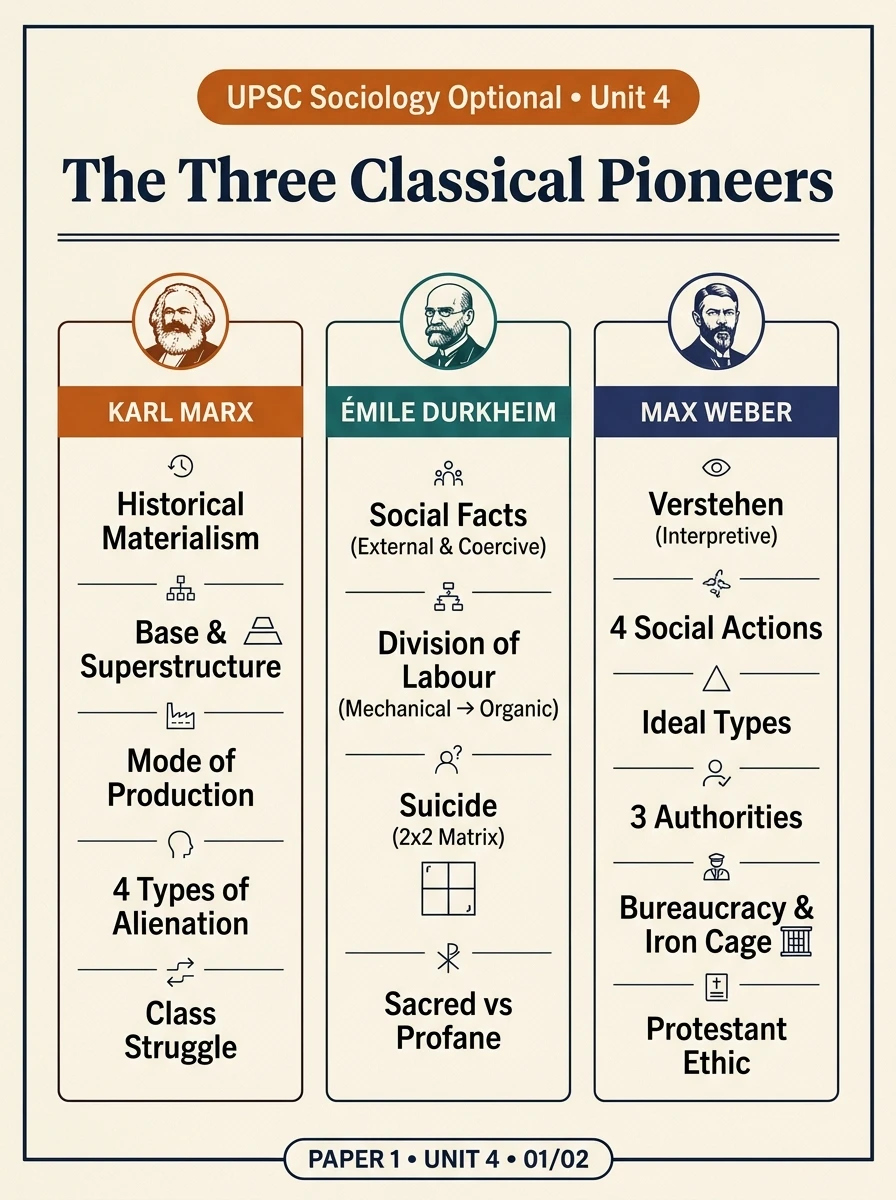
Karl Marx ki Alienation Theory aur Aaj ki Gig Economy (Paper 1 + 2)
Zomato-Swiggy gig workers aur IT burnout par Karl Marx ke 4 types of alienation aur commodity fetishism ko kaise apply karein — UPSC Mains guide.
Padho →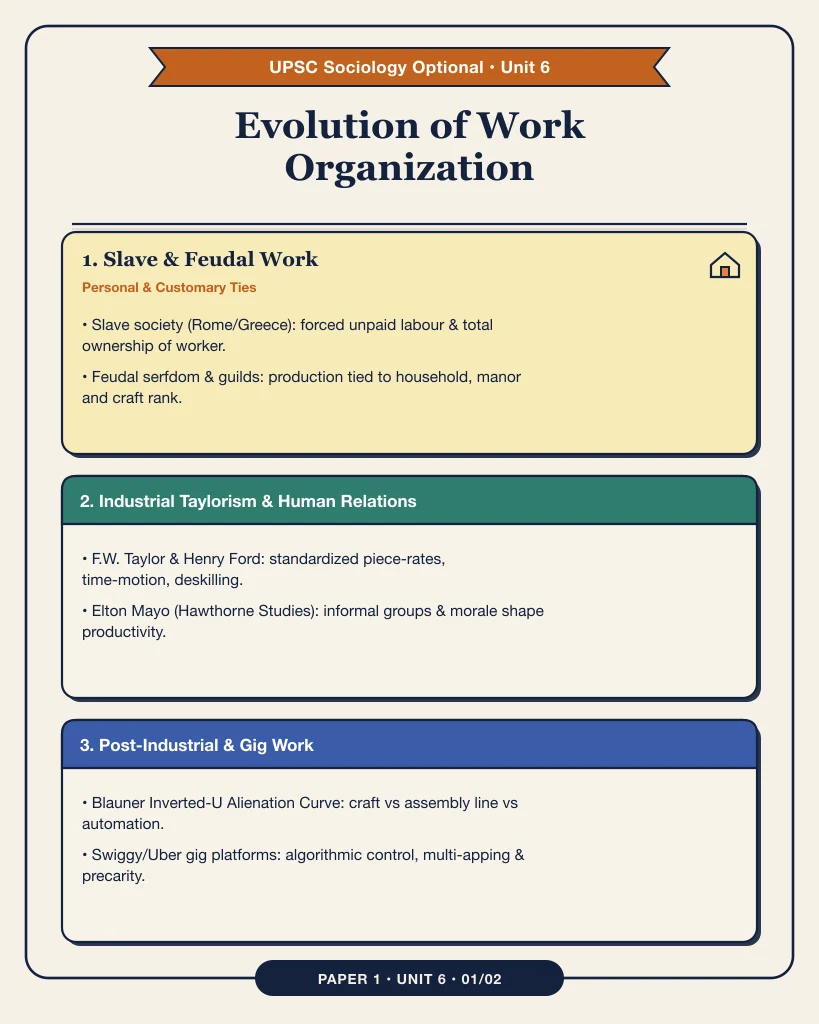 Paper 1 Concepts8 min read
Taylorism, Fordism & Harry Braverman’s Deskilling in the AI & Platform Era
Taylorism se AI-era tak control ka evolution: Indian IT layoffs, call-centre algorithms aur gig work mein new deskilling. NFHS-5, PLFS aur NCRB dikhate hain job insecurity aur rising precarity.
Padho →