Social Capital (Putnam, Bourdieu, Coleman) Explained Through Indian SHGs & Alumni Networks
Social capital samjho Putnam-Bourdieu-Coleman lens se: SHGs ne women solidarity badhayi, jabki corporate alumni/referral networks kabhi-kabhi exclusionary ho jaate hain. NFHS-5, PLFS aur NRLM data se UPSC-ready analysis.
📑 Quick Jump: Contents (4) & Syllabus Chapters
Social Capital ka Indian Puzzle
Social capital sociology ka woh concept hai jo dikhata hai ki relationships, trust, reciprocity aur networks kaise individuals aur groups ko resources tak access deti hain. Lekin UPSC ke liye core challenge ye hai: same network kab empowerment ka engine banta hai aur kab exclusion ka tool? Putnam ke liye social capital civic engagement aur trust ke through collective action ko strengthen karta hai. Bourdieu ke liye yahi networks power, class aur status reproduction ka mechanism ban sakte hain. Coleman ne social capital ko functional resource maana jo action ko facilitate karta hai, especially children aur communities ke liye.
Indian context me ye debate aur sharp ho jata hai. Ek taraf, NRLM ke Women Self Help Groups (SHGs) rural women ko thrift, credit, leadership aur mutual support dete hain. Dusri taraf, elite alumni circles, upper-caste kinship links aur corporate referral networks jobs, internships aur boardroom entry ko ease karte hain, lekin often outsiders ke liye invisible barriers create karte hain. Isliye social capital ko sirf ‘good social ties’ kehna simplistic hoga.
India me social capital ka distribution equal nahi hai. Caste, gender, religion, class aur region isko shape karte hain. NFHS-5 aur PLFS jaisi datasets ye indicate karti hain ki women ka labor force participation, health access aur decision-making household context se deeply affected hai. Oxfam India aur WIL reports ne also highlight kiya hai ki elite networks economic mobility me asymmetry create karte hain. Is topic ko samajhne ke liye hume Putnam ki bonding vs bridging distinction, Bourdieu ki power-centered approach, aur Coleman ki rational-action framing ko Indian empirical realities ke saath read karna hoga.
UPSC answer me yahi conceptual tension high-value banati hai: kya social capital democracy ko deepen karta hai, ya pre-existing inequality ko reproduce karke ‘closed opportunity structures’ bana deta hai? Indian SHGs aur alumni networks isi puzzle ke two opposite poles hain.
Thinkers aur Core Concepts
James S. Coleman ne Foundations of Social Theory me social capital ko aise resource ke roop me define kiya jo social structure me embedded hota hai aur actors ke rational action ko facilitate karta hai. Unke liye trust, obligations, norms aur information channels important hain. Coleman ka contribution yeh hai ki social capital ko purely cultural nahi, balki functional resource ke roop me dekhna chahiye. UPSC angle se, SHG members ke beech repayment discipline, mutual monitoring aur savings habit Colemanian social capital ke examples hain.
Robert D. Putnam ne Making Democracy Work aur Bowling Alone me social capital ko civic engagement, trust aur associational life se जोड़ा. Unki famous distinction bonding social capital aur bridging social capital hai. Bonding capital close-knit groups ko strengthen karti hai—jaise women SHGs, village groups, caste associations. Bridging capital different groups ke beech link create karti hai—jaise mixed-farmer cooperatives, inter-caste market networks, alumni mentoring across regions. Putnam ke according democracy aur development tab stronger hote hain jab bridging capital zyada ho.
Pierre Bourdieu ne social capital ko resource ka aisa form mana jo durable networks of institutionalized relationships se milta hai. Distinction, The Forms of Capital aur Homo Academicus me unka argument clear hai: social capital ko economic aur cultural capital se अलग nahi kiya ja sakta. Ye domination aur reproduction ka tool bhi hai. Indian corporate India me elite college alumni networks, upper-caste recruitment pipelines aur referral-based hiring Bourdieu ke exclusionary capital ko reflect karte hain. Yahan network “open” dikhta hai, but access unequal hota hai.
Mark Granovetter ka The Strength of Weak Ties bhi useful hai. Weak ties often job information aur mobility opportunities provide karte hain. Indian urban labor markets me alumni groups, LinkedIn referrals aur informal professional circles weak ties ki tarah operate karte hain. Lekin inka benefit sabko equally nahi milta, because structural inequality persists.
Nan Lin ne social capital theory me resources embedded in social networks par emphasis kiya. Unka framework batata hai ki network position itself resource access determine karti hai. India me caste-ridden marriage networks, neighborhood segregation aur professional gatekeeping is point ko strongly support karte hain.
Analytical contrast yeh hai: Putnam social capital ko largely positive civic asset maante hain; Coleman uski functional utility dikhate hain; Bourdieu uske power and exclusion dimensions ko foreground karte hain; Granovetter aur Lin micro-mechanisms explain karte hain. UPSC answer me best approach hoga: SHGs ko bonding capital with empowerment potential ke roop me dekho, aur elite alumni/referral systems ko bridging ka selective, often exclusionary version samjho.
| Aspect | Putnam / Coleman / SHGs | Bourdieu / Elite Alumni Networks |
|---|---|---|
| Core meaning | Trust, reciprocity aur collective action ko enable karne wala resource | Networks jo power, privilege aur access reproduce karte hain |
| Main form | Bonding capital strong internal solidarity create karti hai | Closed, selective ties status quo ko preserve karte hain |
| Indian example | NRLM Women SHGs, thrift groups, dairy/federation collectives | IIT/IIM alumni clubs, upper-caste referral hiring, elite board networks |
| Sociological implication | Empowerment, civic participation aur livelihood security | Exclusion, gatekeeping aur social reproduction |
Indian Data aur Empirical Grounding
India me social capital ka best empirical entry point SHGs hain. DAY-NRLM ke under lakhon women SHGs bank linkage, thrift and credit, livelihood diversification aur collective bargaining ko support karte hain. NABARD aur MoRD reports repeatedly show karti hain ki SHGs repayment discipline aur peer monitoring ke through financial inclusion ko deepen karte hain. Kerala’s Kudumbashree, Odisha’s Mission Shakti, aur Andhra Pradesh/Telangana ke SERP groups women solidarity aur market access ke strong examples hain. Ye Putnam ke bonding capital ko reflect karte hain, lekin jab federations banती hain tab bridging capital bhi develop hoti hai.
NFHS-5 indicate karti hai ki women’s decision-making autonomy, mobile phone access, bank account ownership aur exposure to media me gains hue hain, lekin inter-state gaps significant hain. Ye gap batata hai ki social capital alone enough nahi; household patriarchy aur local institutions matter karte hain. SHGs kai states me women ko panchayat participation aur household bargaining me stronger banate hain, lekin caste aur class barriers still visible hain.
PLFS data se labour force participation aur occupational segregation ka picture milta hai. Women, Dalits aur Adivasis informal sector me overrepresented hain. Isse clear hota hai ki network-based access uneven hai. Urban corporate labor market me referrals aur alumni links aspirational mobility ka route ban sakte hain, but access elite educational institutions aur cultural capital se filtered hota hai. This is exactly Bourdieu’s point.
NCRB aur social sector studies indirectly reveal karte hain ki exclusion, vulnerability aur weak institutional trust violence, underreporting aur limited access to justice ko reinforce kar sakte hain. Xaxa Committee ne tribal communities ke historical marginalization ko highlight kiya; in contexts me bridging capital weak hone se state-market access limited rehta hai. Sachar Committee ne Muslims ke institutional exclusion ko evidence ke saath show kiya, including education, jobs aur credit access. Ye social capital deficit nahi, structural exclusion ka issue hai.
Ethnographic studies such as Jean Drèze, Reetika Khera, Nandini Gooptu aur Patricia Jeffrey ke work ne दिखाया hai ki self-help, informal networks aur locality-based solidarity survival strategies ban jaate hain, par woh always emancipatory nahi hote. Oxfam India aur WIL-style inequality reports ye argue karte hain ki elite social networks inequality ko sticky bana dete hain. Supreme Court ke reservation jurisprudence aur equality-based rulings bhi indirectly ye point strengthen karte hain ki opportunity structures ko actively open karna zaroori hai; informal networks alone meritocracy ensure nahi karte.
Thus, Indian evidence suggests: SHGs = grassroots bonding capital with empowerment potential; elite alumni/referral circuits = selective bridging capital with exclusionary consequences. Real sociology yahi dikhati hai ki social capital apne aap me neutral nahi hota; uska class-caste-gender configuration decisive hota hai.
🔑 Bonding vs Bridging Social Capital
Bonding capital close, similar groups ke andar trust aur solidarity badhati hai; bridging capital different groups ke beech links bana kar wider opportunities aur integration create karti hai.
Critical Evaluation
Social capital theory useful hai, but overuse karne par blind spots create hoti hain. Putnam ka framework kabhi-kabhi too consensual lagta hai, jaise trust aur civic life automatically democracy aur development laayenge. India me caste hierarchy, patriarchy aur communal segregation dikhati hai ki bonding capital within-group strength badhati hai, par out-groups ke liye barriers bhi create kar sakti hai. Hence, all social capital is not socially progressive.
Bourdieu is critique ko deepen karta hai, but unki lens me kabhi-kabhi networks ko sirf domination ke prism se dekhne ka risk hota hai. SHGs jaise institutions me women na sirf resources mobilize karti hain, balki self-worth aur public voice bhi build karti hain—ye symbolic empowerment aspect bhi important hai. Coleman helpful hai because he shows how norms and obligations enable action, but his framework micro-level pe heavy hai aur macro inequality ko under-theorize kar sakta hai.
A balanced synthesis yeh hoga: social capital is not a fixed property; it is relational, uneven and context-specific. India me same form different outcomes de sakti hai—e.g., caste network one case me support system, dusre case me exclusionary gatekeeping; SHG one case me empowerment, dusre case me elite capture. Therefore sociological analysis should combine network theory with power, inequality and institutional analysis.
UPSC ke liye best conclusion ye hai ki social capital ko developmental ‘magic bullet’ nahi maanna chahiye. Without redistributive policy, education access, affirmative action, gender justice aur strong public institutions, social capital may merely rearrange inequality rather than remove it.
Answer kaise likhein
- Putnam ke अनुसार bonding capital SHGs me trust, reciprocity aur collective action create karti hai; bridging capital wider market/state linkages banati hai.
- Bourdieu ke अनुसार elite alumni/referral networks power reproduce karte hain aur access ko class-caste filters se control karte hain.
- Coleman ke अनुसार norms, obligations aur information flow social action ko facilitate karte hain; SHGs iska practical example hain.
- Indian data NFHS-5, PLFS, Sachar, Xaxa aur NRLM dikhate hain ki social capital class, caste, gender aur region se deeply structured hota hai.
Is Blog Se Jude Syllabus Chapters
Every Unit Note + Topic-Wise PYQ Mapped (English + Hinglish)
Paper 1 (10 Units) aur Paper 2 (15 Units) — Complete structured notes, thinkers, mind maps & 597 solved PYQs ek saath.
Khud ko test karo
Is post se 3 sawal
0 / 3 attempted
1. Putnam ke according social capital ka sabse relevant indicator kya hai?
2. Bourdieu ke framework me alumni networks ka best description kya hoga?
3. Bonding social capital ka Indian example kaun sa hai?
FAQ
Aksar poochhe jaane wale sawaal
- Putnam aur Bourdieu me main difference kya hai?
- Putnam social capital ko civic trust aur collective action ke resource ke रूप me dekhta hai, jabki Bourdieu ise power, inequality aur exclusion reproduce karne wala capital maanta hai.
- SHGs social capital ka example kaise hain?
- Women SHGs members ke बीच trust, savings discipline, mutual help aur market linkage banati hain; ye bonding capital aur kabhi-kabhi bridging capital dono develop karti hain.
- Elite alumni networks ko social capital kyon kaha jata hai?
- Kyunki ye information, referrals aur opportunity access provide karte hain; lekin Bourdieu ke अनुसार ye often exclusionary hote hain aur inequality reproduce karte hain.
UPSC PYQs
Is topic ke Previous Year Questions
- 2024 · P1
Democracy needs a vibrant culture of civil society in order to strengthen its foundation of citizenship. Comment. (10 marks)
- 2023 · P1
How is civil society useful in deepening the roots of democracy? (10 marks)
- 2023 · P1
Do you think that the boundary line between ethnicity and race is blurred? Justify your answer. (10 marks)
- 2022 · P1
Analyse the nature of transition from ideology to identity politics India. (10 marks)
Roz ke Sociology notes Telegram pe paao
Daily current affairs, PYQ linkages aur direct mentorship support Telegram par.
Related
Aur padho
- Paper 1 ConceptsOWL BLOGP1
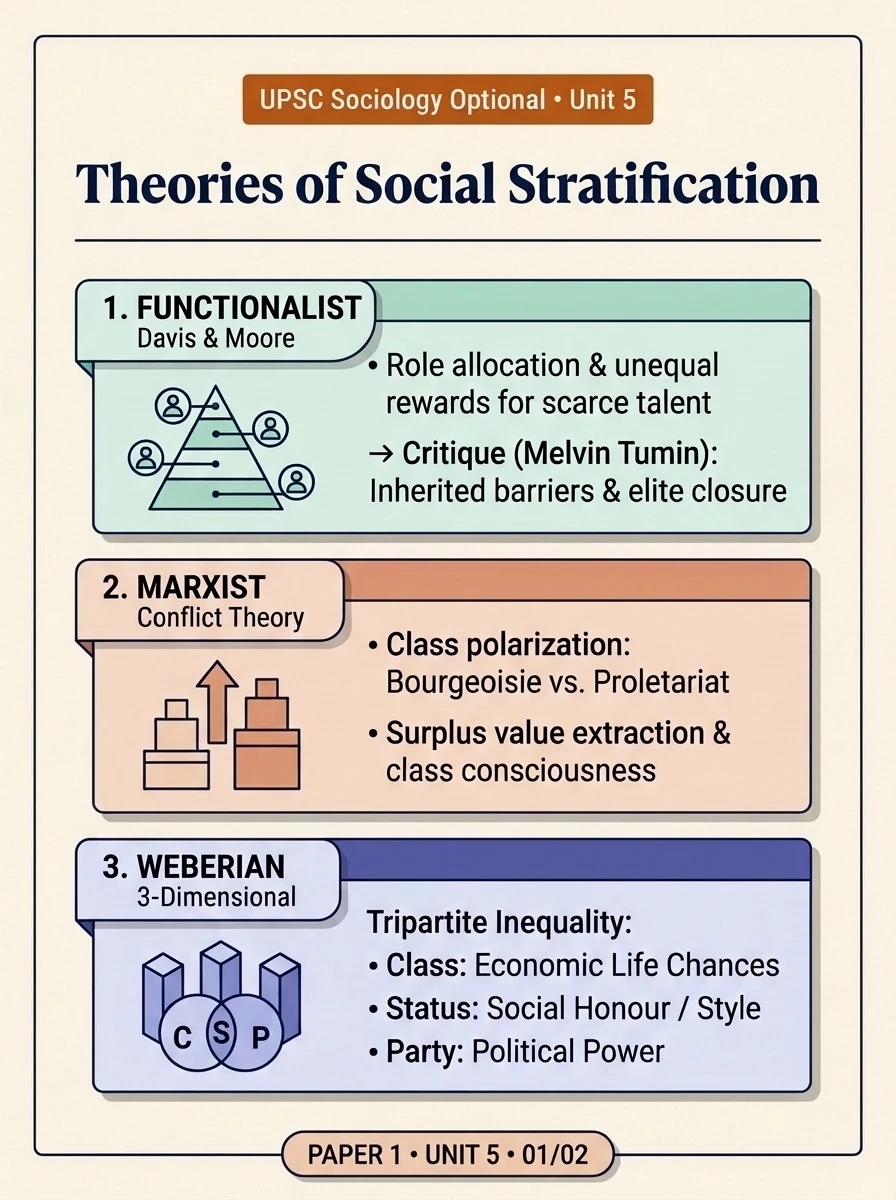
Social Stratification & Mobility for UPSC Sociology: Marx, Weber, Davis-Moore & Gender Dimensions
4 min readSocial Stratification & Mobility for UPSC Sociology: Marx, Weber, Davis-Moore & Gender Dimensions
Unit 5 of Paper 1 is arguably the highest-yielding section in the entire Sociology optional syllabus, forming the analytical backbone for understanding inequality across societies. Whether you are decoding classical class conflict or...
Padho → 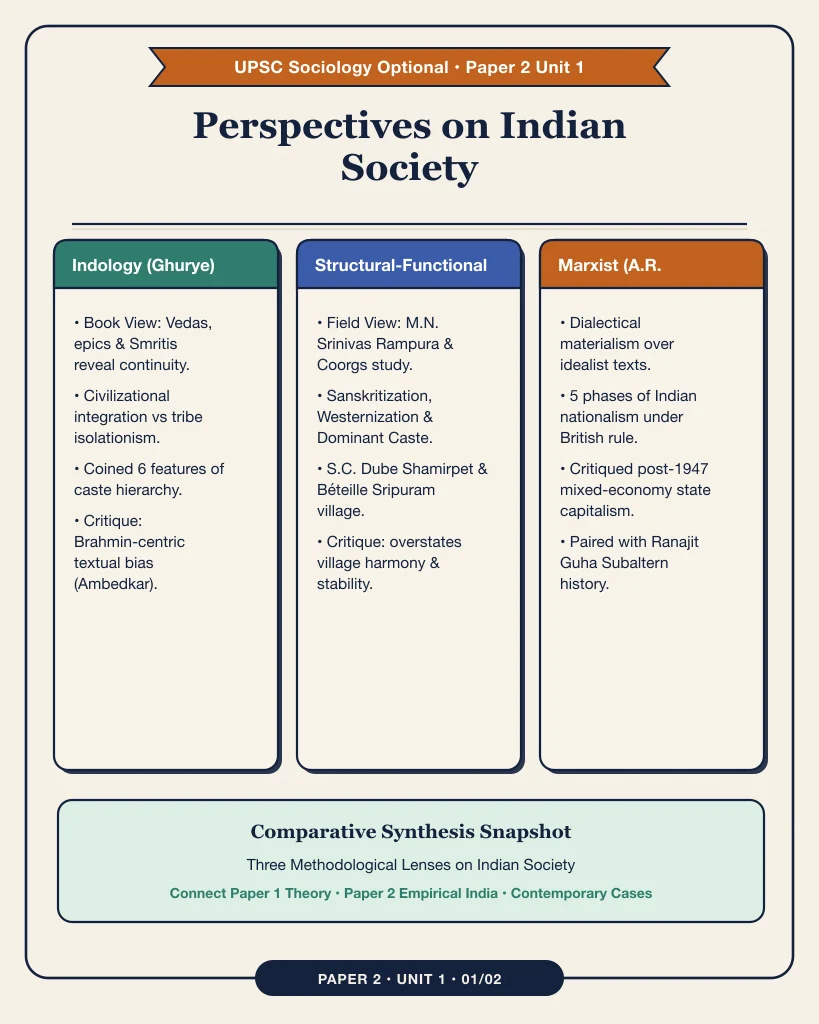 Answer Writing8 min read
How 20-Second Micro-Diagrams Can Add +25 Marks in UPSC Sociology Mains
20-second micro-diagrams se Sociology answer ko sharp karo. Parsons, Merton, Yogendra Singh aur Beteille ke frameworks se P1-P2 me theory + Indian data ko connect karke +25 marks ka jump possible hai.
Padho →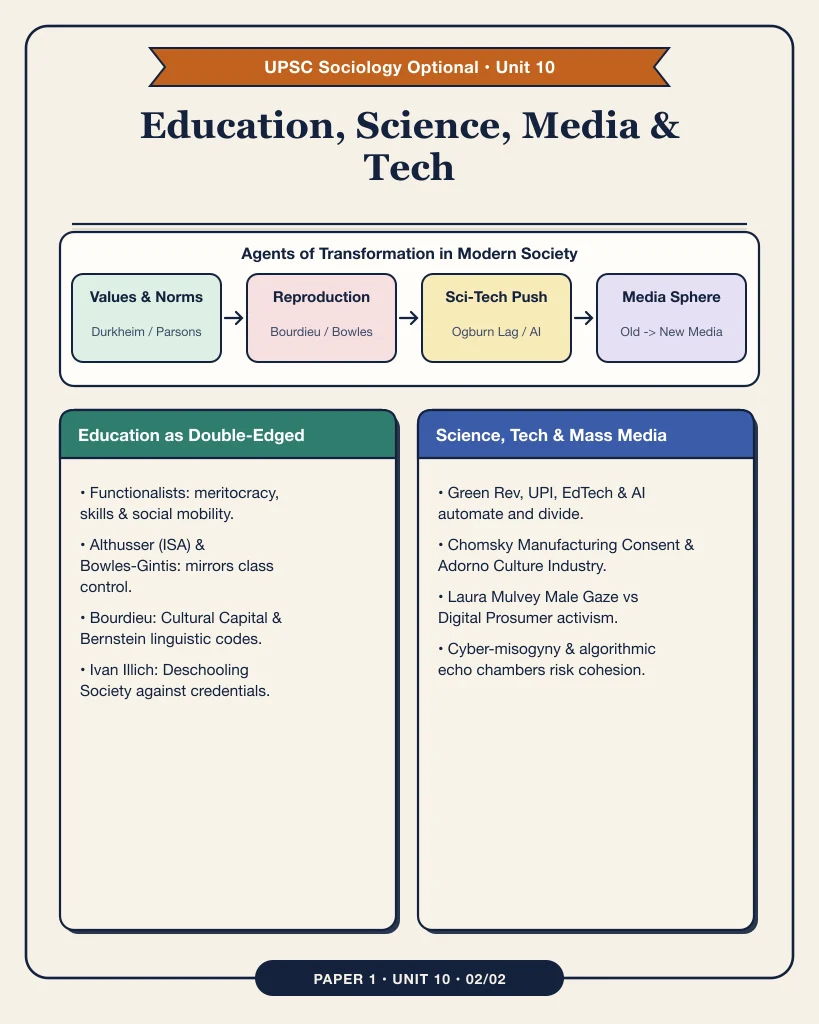 Current Affairs Link9 min read
Education Disparities & NEP 2020: Bourdieu, Bowles-Gintis & ASER 2024 Data
NEP 2020 equality promise vs ground reality: ASER 2024 me private tuition aur digital divide clear hai. Bourdieu, Bowles-Gintis aur Durkheim se inequality ka sociology samjho.
Padho →