Education Disparities & NEP 2020: Bourdieu, Bowles-Gintis & ASER 2024 Data
NEP 2020 equality promise vs ground reality: ASER 2024 me private tuition aur digital divide clear hai. Bourdieu, Bowles-Gintis aur Durkheim se inequality ka sociology samjho.
📑 Quick Jump: Contents (4) & Syllabus Chapters
Education Disparities aur NEP 2020: conceptual puzzle
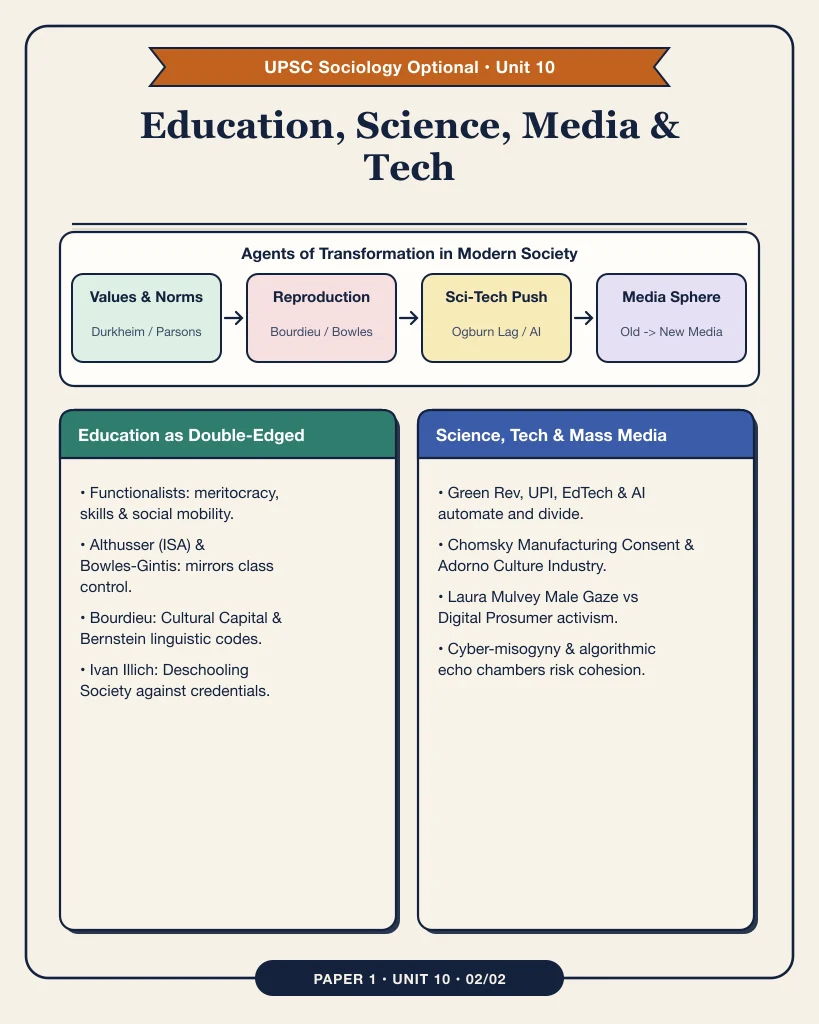
Education ko modern society ka great equalizer maana jata hai. Durkheim ke liye school moral cohesion aur social solidarity build karta hai; Parsons ke liye yeh achievement-based meritocracy ko stabilize karta hai. Lekin Indian reality mein yeh promise uneven hai. Ek taraf NEP 2020 inclusive, flexible aur equitable learning ki baat karti hai; dusri taraf caste, class, gender, region aur language ke layers education ko reproduce karte dikhte hain. यही conceptual puzzle Sociology Optional ke liye core hai: kya education social mobility ka engine hai ya social inequality ka reproduction mechanism?
India mein schooling access badha hai, par learning outcomes, digital access, private tuition dependence aur English-medium advantage ne new stratification create ki hai. ASER 2024 jaisi reports dikhati hain ki learning recovery uneven hai aur private tuition ka burden kuch groups par zyada hai. COVID ke baad digital divide sirf device availability tak limited nahi raha; internet quality, parental support, home study environment aur digital literacy bhi decisive factors ban gaye. Rural poor households, girls, Dalit-Adivasi communities aur first-generation learners aksar is gap ka sabse bada burden uthate hain.
Is theme ko samajhne ke liye classical sociology aur contemporary Indian evidence ko jodna zaroori hai. Durkheim aur Parsons school ko integrative institution ke roop mein dekhte hain, par Bowles and Gintis ka correspondence principle batata hai ki school workplace hierarchy ka reflection hota hai. Bourdieu cultural capital, habitus aur symbolic violence ke through samjhate hain ki exam merit ke piche bhi inherited privilege ka role hota hai. Illich to aur radical hai: school itself ko deschooling ke lens se challenge karte hain.
UPSC ke liye yeh topic important hai kyunki yeh education policy, social justice, human development, affirmative action aur governance ko ek hi analytical frame mein connect karta hai. NEP 2020 ko sirf policy document ki tarah nahi, balki stratification aur social reproduction ke field mein test karna hoga.
Thinkers: education ka sociological debate
Emile Durkheim ne education ko society ka moral apparatus mana. Education and Sociology aur Moral Education mein unka argument hai ki school shared values, discipline aur social cohesion create karta hai. Unke hisaab se education ka function sirf skills dena nahi, balki child ko social self mein transform karna hai. Is lens se NEP 2020 ka value-based, experiential aur holistic learning emphasis meaningful lagta hai. Par Durkheim ka model relatively harmonious hai; woh unequal starting points ko underestimate kar sakta hai.
Talcott Parsons ne school ko meritocracy ka bridge kaha. Unke functionalist framework mein family particularistic standards deti hai, school universalistic standards se children ko judge karta hai. The School Class as a Social System mein achievement, role allocation aur value consensus central hai. Yeh view modern India ke aspiration narrative se match karta hai: hard work se upward mobility. Lekin empirically, exam scores aur credentials parity nahi guarantee karte. Rural-urban, private-government, English-regional medium gap is model ko complicate karta hai.
Pierre Bourdieu education inequality ko deepest sociological explanation dete hain. Reproduction in Education, Society and Culture, Distinction aur The Forms of Capital mein woh cultural capital, social capital aur symbolic capital ke through batate hain ki school dominant class ki language, taste aur dispositions ko natural merit bana deta hai. Habitus learners ko pre-dispose karta hai ki kaunse codes unke liye accessible hain. Indian context mein upper-caste urban middle-class child ka home environment school codes se zyada aligned hota hai than first-generation learner ka. Isliye tuition, English fluency, digital confidence aur parental support hidden advantage ban jate hain.
Samuel Bowles and Herbert Gintis ne Schooling in Capitalist America mein correspondence principle diya: school ki hierarchy workplace hierarchy se match karti hai. Classroom obedience, punctuality, grading aur surveillance labour market discipline ko mirror karte hain. India mein coaching culture aur competitive examinations is logic ko aur sharpen karte hain. Merit language ke niche class power ka structure chhupa rehta hai.
Ivan Illich Deschooling Society mein formal schooling ko radical critique karte hain. Unke liye school dependency create karta hai aur learning ko credentialism ke saath lock kar deta hai. Indian context mein yeh critique useful hai because technology, community learning aur open educational resources expansion se alternative learning ecosystems possible hain. Lekin pure deschooling ka model state responsibility, equity safeguards aur foundational literacy ke bina unrealistic bhi ho sakta hai.
Analytical contrast yeh hai: Durkheim-Parsons education ko social order aur mobility ka instrument maante hain; Bourdieu-Bowles-Gintis usi system ko inequality reproduction ka medium samjhte hain; Illich institution itself ko question karta hai. UPSC answer mein inhe binary nahi, layered way mein use karna chahiye: school ek saath inclusion ka space bhi hai aur exclusion ka mechanism bhi.
| Aspect | Functionalist View | Conflict/Reproduction View |
|---|---|---|
| Core idea | Education social cohesion, value consensus aur meritocracy promote karti hai. | Education existing class/caste power ko reproduce karti hai. |
| Key thinkers | Durkheim, Parsons | Bourdieu, Bowles & Gintis, Illich |
| School role | Integrative institution; talents ko sort karta hai. | Hidden curriculum aur cultural capital ke through inequality legitimize karta hai. |
| Indian implication | NEP 2020 can expand access, flexibility and inclusion. | Without equity measures, digital divide and tuition dependence will deepen stratification. |
Indian data aur empirical evidence
Indian context mein education disparity ko samajhne ke liye multiple sources useful hain. ASER 2024 ka core takeaway yeh hai ki learning recovery uneven hai aur basic competencies, especially reading aur arithmetic, ab bhi fragile hain. Rural India mein school participation better hui hai, lekin learning quality aur home support ke gaps visible hain. ASER pattern repeatedly dikhata hai ki government school children ke liye learning support at home aur private tuition access mixed hai, jabki better-off households tuition aur device access dono ko bundle kar lete hain.
Private tuition divide sociology ka important indicator hai. Tuition sirf academic supplement nahi; yeh class advantage ka extension ban chuka hai. Middle-class families supplementary coaching, test-prep aur digital subscriptions afford kar leti hain, jabki poor households ki ability limited hoti hai. Isse Bourdieu ka cultural capital clearly visible hota hai: same syllabus, but unequal scaffolding. Competitive exams aur school assessments me tuition ki hidden role meritocracy ko distort karti hai.
Digital literacy gaps bhi critical hain. NFHS-5 ne dikhaya ki many households mein internet access aur female digital autonomy ab bhi uneven hai. PLFS aur periodic labour-related evidence se idea milta hai ki parental education aur formal employment household learning environment ko strongly shape karte hain. Rural girls, SC/ST households aur poor regions mein smartphones shared hote hain, data costly hota hai, aur study space constrained rehta hai. Iska effect online classes, homework submission aur self-learning par direct padta hai.
Policy side par NEP 2020 foundational literacy, technology integration aur equitable access ka promise karti hai, but implementation decentralized hai. RTE Act ke practical experience se pata chalta hai ki enrollment alone learning guarantee nahi karta. Sachar Committee ne Muslim educational backwardness aur access barriers highlight kiye the; Xaxa Committee ne Adivasi education ke infrastructural, language aur teacher-related deficits underline kiye. Ye reports batati hain ki social identity-based disadvantage education field mein persistent hai.
Judicially bhi equity concern relevant hai. Pramati Educational and Cultural Trust v. Union of India ne minority institutions ke autonomy debate ko sharpen kiya; Society for Unaided Private Schools of Rajasthan v. Union of India mein RTE aur private school obligations par discussion hua. Courts ne repeatedly yeh acknowledge kiya ki education rights aur quality access ko balance karna hoga. Iske saath ethnographic studies jaise Veena Das ke urban marginality observations aur school-based fieldwork dikhate hain ki everyday classroom interactions mein language, shame, discipline aur aspiration ka role strong hota hai.
Overall, Indian evidence yeh establish karta hai ki education ka challenge sirf access ka nahi, capability, support and conversion of opportunity into achievement ka hai.
🔑 Cultural capital
Family se milne wali language, habits, tastes aur confidence jo school mein success ko easier banati hai; Bourdieu ke mutabik yeh invisible inequality hai.
Critique: sirf inequality thesis nahi, balanced reading bhi zaroori hai
Education disparity ko sirf reproduction theory se read karna incomplete hoga. First, functionalist thinkers jaise Durkheim aur Parsons hume remind karte hain ki school ka genuine integrative role hota hai. India mein mass schooling, mid-day meals, scholarships, Kasturba Gandhi Balika Vidyalaya, Samagra Shiksha aur NEP 2020 ke foundational reforms ne access ko expand kiya hai. Bohot se first-generation learners ke liye school social mobility ka real route bhi hai.
Second, Bourdieu ka framework powerful hai, but deterministic nahi hona chahiye. Cultural capital static nahi hota; state interventions, mother-tongue instruction, remedial teaching aur community mentoring is gap ko partially reduce kar sakte hain. Technology bhi sirf exclusion ka tool nahi; open resources, DIKSHA, SWAYAM aur local digital facilitation centers inclusion badha sakte hain—agar infrastructure equitable ho.
Third, Illich ka deschooling critique intellectually provocative hai, but complete institutional abandonment practical nahi. Mass literacy, constitutional entitlements aur quality assurance ke liye public schooling indispensable hai. India jaisi unequal society mein school ko dismantle karne ke bajay democratize karna zyada realistic hai.
Answer mein nuanced synthesis dikhao: education ek dual institution hai—ek taraf socialization, citizenship aur mobility; dusri taraf selection, sorting aur reproduction. NEP 2020 ka evaluation isi duality par hona chahiye. Agar teacher quality, digital equity, language inclusion, gender-sensitive infrastructure aur need-based support robust nahi hua, to policy rhetoric aur ground reality ka gap bana rahega. Isliye sociological conclusion ye hona chahiye ki equality of access ko equality of learning, opportunity and outcomes mein convert karna hi real reform hai.
Answer kaise likhein
- Durkheim-Parsons ke through education ko social cohesion, meritocracy aur role allocation ke roop mein explain karo.
- Bourdieu aur Bowles-Gintis se dikhao ki cultural capital, hidden curriculum aur correspondence principle inequality reproduce karte hain.
- ASER 2024, NFHS-5, PLFS aur Sachar/Xaxa se prove karo ki private tuition, digital divide aur identity-based gaps persistent hain.
- NEP 2020 ko policy promise ke roop mein assess karo, but implementation, funding, teacher capacity aur equity safeguards par critical raho.
Is Blog Se Jude Syllabus Chapters
Every Unit Note + Topic-Wise PYQ Mapped (English + Hinglish)
Paper 1 (10 Units) aur Paper 2 (15 Units) — Complete structured notes, thinkers, mind maps & 597 solved PYQs ek saath.
Khud ko test karo
Is post se 3 sawal
0 / 3 attempted
1. Bourdieu ke framework mein school success ka hidden source kya hai?
2. Bowles and Gintis ka correspondence principle kis baat ko explain karta hai?
3. NEP 2020 ko sociology lens se evaluate karte waqt sabse relevant tension kya hai?
FAQ
Aksar poochhe jaane wale sawaal
- Durkheim ke according education ka main function kya hai?
- Durkheim ke liye education moral cohesion, discipline aur shared social values create karti hai.
- Bourdieu education inequality ko kaise samjhte hain?
- Bourdieu ke mutabik school dominant class ka cultural capital reward karta hai, isliye merit often inherited advantage se shaped hoti hai.
- ASER 2024 se education disparity par kya insight milta hai?
- ASER 2024 dikhati hai ki learning recovery uneven hai aur private tuition aur digital support access mein strong class divide ab bhi exist karta hai.
UPSC PYQs
Is topic ke Previous Year Questions
- 2025 · P1
“Educational development is the only Panacea for country's all ills and evils." Critically examine the above statement with reference to NEP-2020. (10 marks)
- 2025 · P1
To what extent can education and skill development be an agent of social change? Critically analyze. (10 marks)
- 2024 · P1
Education is a key to social development. Elucidate. (10 marks)
- 2024 · P1
What is your opinion on their increasing trend in 'online' education and teaching? (10 marks)
Roz ke Sociology notes Telegram pe paao
Daily current affairs, PYQ linkages aur direct mentorship support Telegram par.
Related
Aur padho
 Paper 1 Concepts9 min read
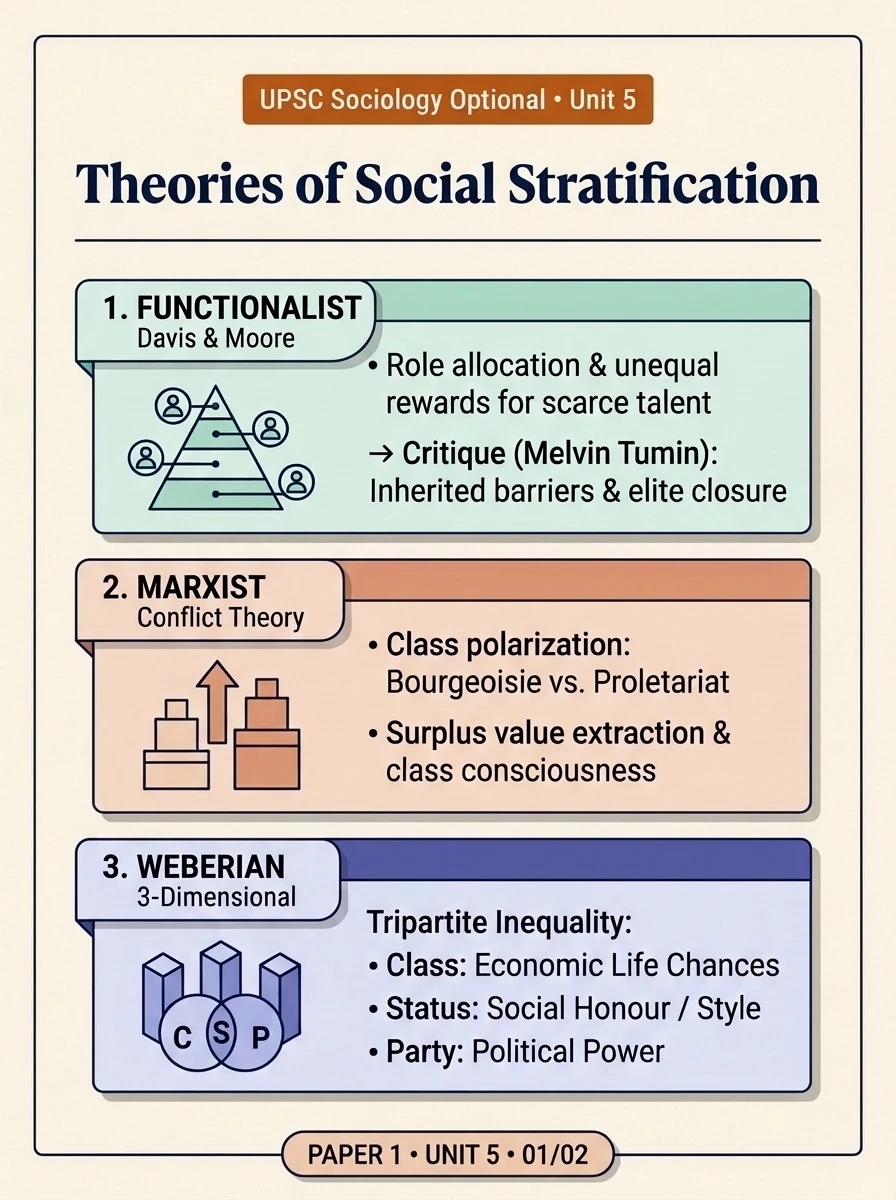
Social Capital (Putnam, Bourdieu, Coleman) Explained Through Indian SHGs & Alumni Networks
Social capital samjho Putnam-Bourdieu-Coleman lens se: SHGs ne women solidarity badhayi, jabki corporate alumni/referral networks kabhi-kabhi exclusionary ho jaate hain. NFHS-5, PLFS aur NRLM data se UPSC-ready analysis.
Padho →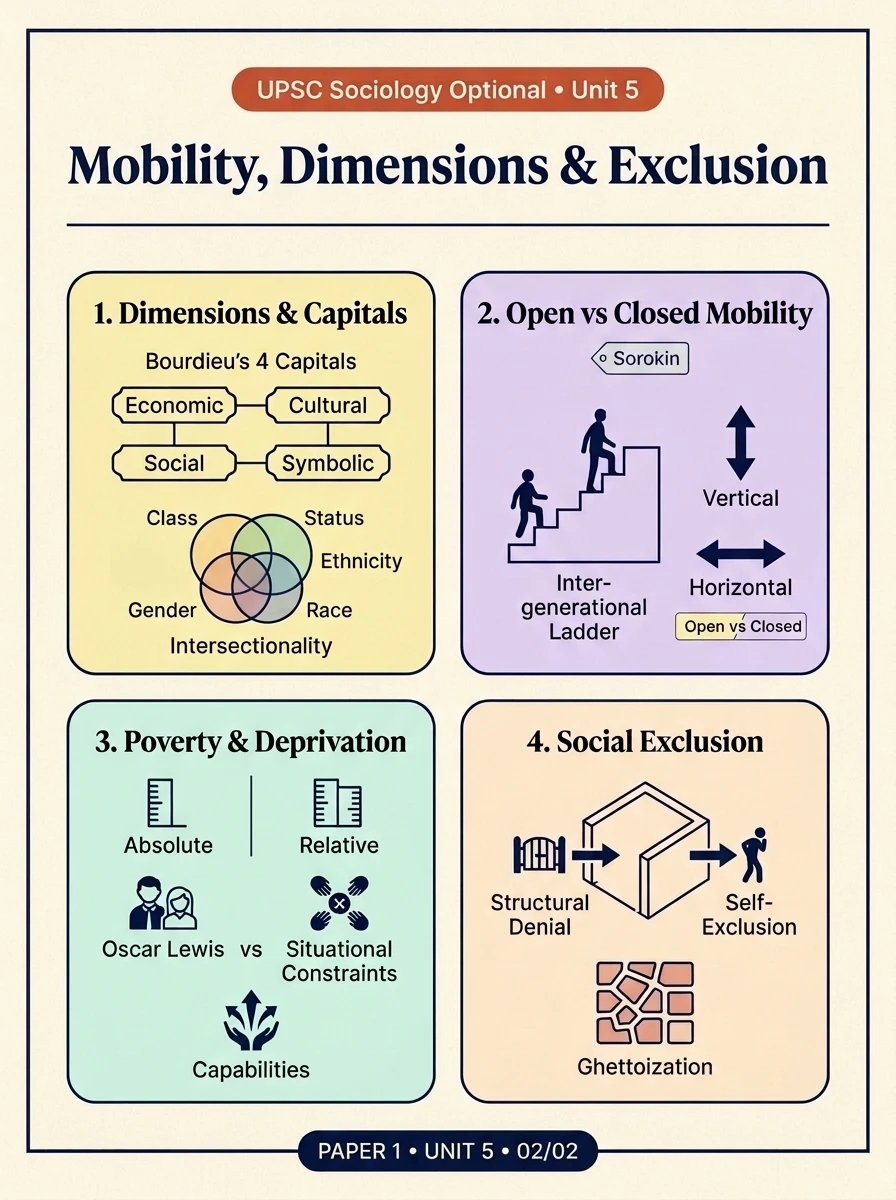 Paper 1 Concepts9 min read
Social Mobility: Sorokin, Goldthorpe, Bourdieu Cultural Capital & Indian Reality
Social mobility sirf income ka shift nahi, power aur status ka bhi khel hai. Sorokin se Bourdieu tak, aur India mein ASER, NFHS-5, PLFS, Xaxa-Sachar se dikhता hai ki SC/ST/Muslim mobility ab bhi uneven hai.
Padho →