Live-in Relationships, Supriyo Verdict & Post-Modern Kinship Shifts in India
Live-in relationships aur Supriyo verdict ne India me kinship, marriage aur autonomy ka debate teekha kiya hai. NFHS-5, PLFS aur SC rulings dikhati hain ki family ab sirf tradition nahi, negotiation bhi hai.
📑 Quick Jump: Contents (4) & Syllabus Chapters
Intro
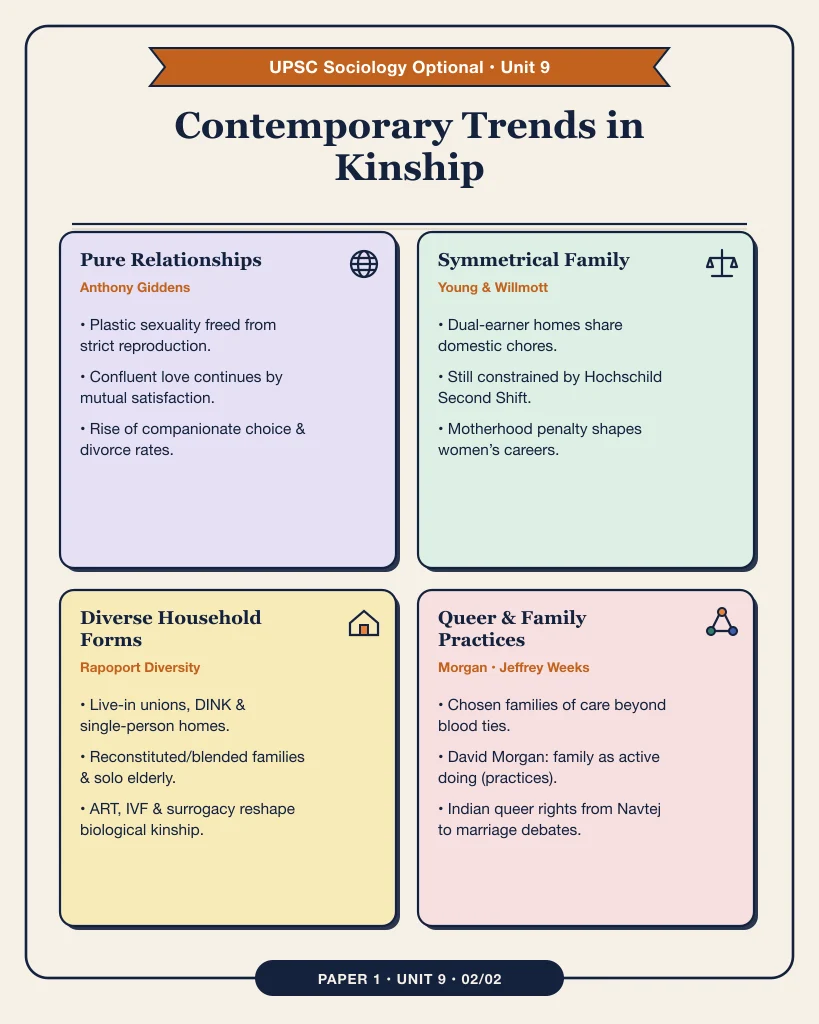
India me live-in relationships par debate sirf moral nahi hai; yeh kinship, gender, law aur state surveillance ka sociology of intimacy hai. Traditional Indian family ko aksar stable, sacred aur patrilineal maana gaya, lekin urbanisation, female education, delayed marriage, migration, digital dating aur individualisation ne relationship forms ko diversify kiya hai. Isi backdrop me Anthony Giddens ka Pure Relationship aur plastic sexuality ka idea useful hai: intimacy ab duty-based institution se shift hokar mutual satisfaction, emotional negotiation aur exit option par based ho rahi hai. Doosri taraf, Kath Weston ki Families We Choose batati hai ki kinship blood se zyada chosen ties, friendship, cohabitation aur queer affiliations ke through bhi construct ho sakti hai.
India me yeh transformation linear nahi hai. Ek taraf metro cities me live-in relationships ko autonomy aur companionate union ke रूप me dekha ja raha hai; doosri taraf social stigma, family honour, caste endogamy aur housing discrimination ise constrain karte hain. Supreme Court ka Supriyo v. Union of India (2023) decision same-sex marriage rights par tha, lekin usne constitutional recognition aur family law reform ke limits ko reveal kiya. Is verdict ke context me live-in aur kinship debate aur bhi complex ho gaya: kya state relationship ko regulate kare, ya sirf rights aur safety ensure kare? Uttarakhand UCC me live-in registration requirement ne ise administrative visibility aur surveillance ke frame me la diya.
Sociologically, yeh issue post-modern kinship shift ko show karta hai—jahan marriage universal norm nahin, balki ek among many relational forms ban rahi hai. Yet India me patriarchy, caste, religion aur dependency structures abhi bhi deeply embedded hain. Isliye UPSC answer me sirf liberal celebration nahi, balki structural inequality, state control aur social conflict ka balanced analysis chahiye.
Thinkers and Theoretical Lens
Anthony Giddens ka The Transformation of Intimacy (1992) UPSC ke liye central text hai. Unka pure relationship concept kehta hai ki relationship tab tak continue hota hai jab tak dono partners ko emotional/sexual satisfaction mil rahi ho; yeh tradition, duty ya external pressure se less and less governed hota hai. Is model me intimacy reflexive ho jati hai—partners constantly negotiate karte hain. Giddens ka plastic sexuality idea bhi crucial hai: sexuality reproduction se detach hokar pleasure, identity aur self-expression se linked ho rahi hai. Live-in relationships ko samajhne ke liye yeh lens helpful hai, kyunki cohabitation me marriage ke formal rituals ke bina emotional companionship aur shared life build hoti hai. But Giddens often Western, urban, middle-class individualism ko universalize kar dete hain.
Kath Weston ki classic book Families We Choose (1991) especially queer sociology me important hai. Weston argue karti hain ki kinship biological descent se limited nahi; LGBTQ+ communities me “chosen families” care, support, obligation aur belonging create karte hain. India me bhi migration aur urban anonymity me friends, roommates, partner networks aur community groups substitute kinship roles play kar sakte hain. Live-in relationship is perspective se ek aisa relational form hai jahan family status legal stamp se kam, lived care se zyada define hota hai.
Judith Butler ka gender performativity angle add karne se debate stronger hoti hai. Marriage aur heterosexual family often normative scripts impose karti hain. Live-in aur same-sex unions un scripts ko disrupt karte hain. Butler ke hisaab se gender natural essence nahi, repeated performance hai; therefore relationship forms bhi socially regulated performances hain. India me yeh useful hai because honour, morality aur respectability often female sexuality par control ke through produce hote hain.
Partha Chatterjee ka modernity and nationalism reading bhi relevant hai. Unke framework me Indian society me “inner domain” of tradition ko national culture ka symbol banaya gaya, jahan women par custodianship rakhi gayi. Live-in relationships is moral order ko challenge karte hain. Similarly, M.N. Srinivas ka dominant caste and Sanskritisation lens explain karta hai ki kinship norms sirf personal choice nahi; caste hierarchy aur endogamy unhe shape karte hain. Hence, Giddens-Weston ya Butler ko Indian context me apply karte waqt caste, class, religion aur family power ko centre me rakhna zaroori hai.
Overall contrast clear hai: Giddens autonomy-based intimacy explain karte hain; Weston kinship ko chosen and relational banaati hain; Butler norm-breaking subjectivity ko highlight karti hain; Chatterjee aur Srinivas dikhate hain ki India me intimacy hamesha power structures se mediated hoti hai.
| Aspect | Traditional Kinship Model | Post-Modern Kinship Model |
|---|---|---|
| Basis of tie | Blood, marriage, lineage, caste endogamy | Choice, consent, emotional affinity, negotiated companionship |
| Authority | Patriarchal family, elders, community sanction | Individual autonomy, partner negotiation, reflexive self |
| Sexuality | Reproduction-oriented, controlled, moralised | Pleasure-oriented, identity-linked, plastic sexuality |
| Social control | Honor, stigma, kin surveillance, legal-administrative norms | Rights discourse, privacy claims, state visibility and regulation |
Indian Data and Empirical Context
India me live-in relationships ka exact national prevalence data limited hai, and that itself is sociologically significant. However, indirect indicators show changing family patterns. NFHS-5 (2019-21) reveals women’s education, contraceptive access, and age at marriage have improved in many states, though child marriage and intimate partner violence remain concerns. Delayed marriage and rising female schooling especially urban settings me cohabitation-friendly conditions create karte hain. NFHS-5 also shows that violence and dependency still shape women’s bargaining power, so “choice” unevenly distributed hai.
PLFS and urban labour trends show migration, service-sector work, and precarious employment increasing. Urban young adults often live away from parental homes for jobs, education and internships; this spatial separation weakens direct kin surveillance and can facilitate co-residential partnerships. Yet rental housing discrimination, especially against inter-caste, interfaith, or unmarried couples, remains common—so economic class matters.
Court and policy context me Supreme Court ka Supriyo v. Union of India (2023) landmark hai. Court ne same-sex marriage ko judicially read-in nahi kiya, but dignity, non-discrimination and administrative access issues ko acknowledge kiya. Isne reveal kiya ki constitutional rights aur social recognition alag cheezein hain. Live-in relationships ke relation me Lata Singh v. State of U.P. (2006) ne adult couples ko protection di; Indra Sarma v. V.K.V. Sarma (2013) ne domestic relationship ko Protection of Women from Domestic Violence Act ke under discuss kiya. These rulings show that state ignore nahi kar sakta, but over-regulation bhi problematic hai.
Ethnographically, urban India me live-in aur companionate unions par studies often stigma, secrecy and family negotiation show karti hain. Inter-caste and inter-religious couples ke case studies—jaise honour-based violence, police protection petitions, or court marriages ke baad social boycott—demonstrate karte hain ki kinship sirf private matter nahi, collective control ka site hai. Assam, Haryana, UP, Rajasthan aur parts of Gujarat me family honour and caste panchayat pressure still strong hai. Conversely, metro belts like Bengaluru, Delhi-NCR, Mumbai and Pune me youth mobility aur housing markets relatively greater flexibility deti hain.
Policy-wise, Uttarakhand UCC live-in registration debates ne question raise kiya: safety ke naam par visibility, ya visibility ke naam par surveillance? If registration helps protect women and children, it may be justified; but if it becomes moral policing, then privacy and autonomy weaken ho sakti hain. So Indian evidence points to a mixed picture: expanding choice, but persistent inequality, stigma and state mediation.
🔑 Pure Relationship
A relationship that continues only as long as both partners derive sufficient emotional/sexual satisfaction, rather than because of tradition, duty, or external pressure.
Critique and Nuanced Synthesis
Giddens aur Weston useful hain, but unki limitations clear hain. First, Giddens ka framework often Western individualism ko central maan leta hai. India me choice real hai, but deeply constrained by caste, class, gendered dependence, family honour and economic insecurity. A poor woman or migrant worker ke liye live-in relationship “freely chosen” ho sakta hai, par equally “freely exited” nahi hota. Second, Weston ki chosen family thesis LGBTQ+ and urban community contexts ke liye powerful hai, but it should not erase the material importance of biological kin, especially in caregiving, inheritance, old-age support and crisis management.
Counter-thinkers include Partha Chatterjee, who reminds us that modernity in postcolonial societies is uneven and often gendered; and Sylvia Walby, whose patriarchy framework explains how institutional power continues to shape intimacy. Pierre Bourdieu bhi useful hai because cultural capital and habitus family choices ko structure karte hain. In India, caste endogamy and honour logic cannot be reduced to mere “personal preference.”
A balanced synthesis would say: live-in relationships are not simply signs of Westernization, nor purely rebellion against tradition. They are negotiated forms emerging under urbanisation, women’s aspiration, law’s partial recognition, and the state’s desire to classify intimacy. The Supriyo judgment and Uttarakhand UCC show two opposite impulses: constitutional restraint and administrative control. Sociologically, the real issue is not whether live-in is moral or immoral, but whether law can protect autonomy without reproducing surveillance. That is the strongest UPSC line of argument.
Answer kaise likhein
- Giddens ke pure relationship aur plastic sexuality concepts se live-in relationships ko reflexive modern intimacy ke form me samjha ja sakta hai.
- Weston ki Families We Choose kinship ko choice, care aur belonging ke basis par dekhti hai; India me urban youth aur queer communities isse resonate karti hain.
- Supriyo judgment ne same-sex marriage par judicial limits dikhaye, while Lata Singh aur Indra Sarma cases ne live-in couples ko partial legal protection di.
- Indian context me caste, patriarchy, housing discrimination aur family honour choice ko constrain karte hain; isliye post-modern kinship uneven aur unequal hai.
Is Blog Se Jude Syllabus Chapters
Every Unit Note + Topic-Wise PYQ Mapped (English + Hinglish)
Paper 1 (10 Units) aur Paper 2 (15 Units) — Complete structured notes, thinkers, mind maps & 597 solved PYQs ek saath.
Khud ko test karo
Is post se 3 sawal
0 / 3 attempted
1. Anthony Giddens ka ‘pure relationship’ concept kis par based hai?
2. Kath Weston ki Families We Choose primarily kya highlight karti hai?
3. Uttarakhand UCC live-in registration debate ka core sociological issue kya hai?
FAQ
Aksar poochhe jaane wale sawaal
- Q1. Kya live-in relationship Indian society me purely western import hai?
- Nahi. Yeh global intimate modernity ka part hai, but India me is par caste, patriarchy, urbanisation aur legal uncertainty ka strong local impact hai.
- Q2. Supriyo verdict ka live-in debate se kya connection hai?
- Supriyo ne constitutional recognition ke limits dikhaye. Isse pata chalta hai ki state intimacy ko protect bhi kar sakta hai aur define bhi, but social acceptance separate issue hai.
- Q3. UPSC me is topic ko kaise frame karein?
- Kinship change, gender autonomy, legal regulation, and social inequality ke intersection me answer likho; thinkers aur case laws ko integrate karo.
UPSC PYQs
Is topic ke Previous Year Questions
- 2025 · P1
How same sex marriages are responsible for population dynamics in India? Discuss. (10 marks)
- 2025 · P1
In what way does queer kinship challenge the traditional kinship system? Substantiate by giving illustrations. (10 marks)
- 2025 · P1
Give an account of the recent trends of marriage in the Indian context. How are these different from traditional practices? (10 marks)
- 2024 · P2
Why is the study of marriage important in Sociology? Analyse the implications of changing marriage patterns for Indian society. (20 marks)
Roz ke Sociology notes Telegram pe paao
Daily current affairs, PYQ linkages aur direct mentorship support Telegram par.
Related
Aur padho
- Paper 2 IndiaOWL BLOGP2
Patriarchy, Family & Marriage in India: Live-in Relationships, Son Meta-Preference & Feminisation of Agriculture
4 min readPatriarchy, Family & Marriage in India: Live-in Relationships, Son Meta-Preference & Feminisation of Agriculture
Indian kinship is undergoing a silent churn—caught between neo-local urban aspirations and resilient caste-gender hierarchies. When analyzing patriarchy, changing family, marriage in India for UPSC sociology, aspirants must move beyond...
Padho → 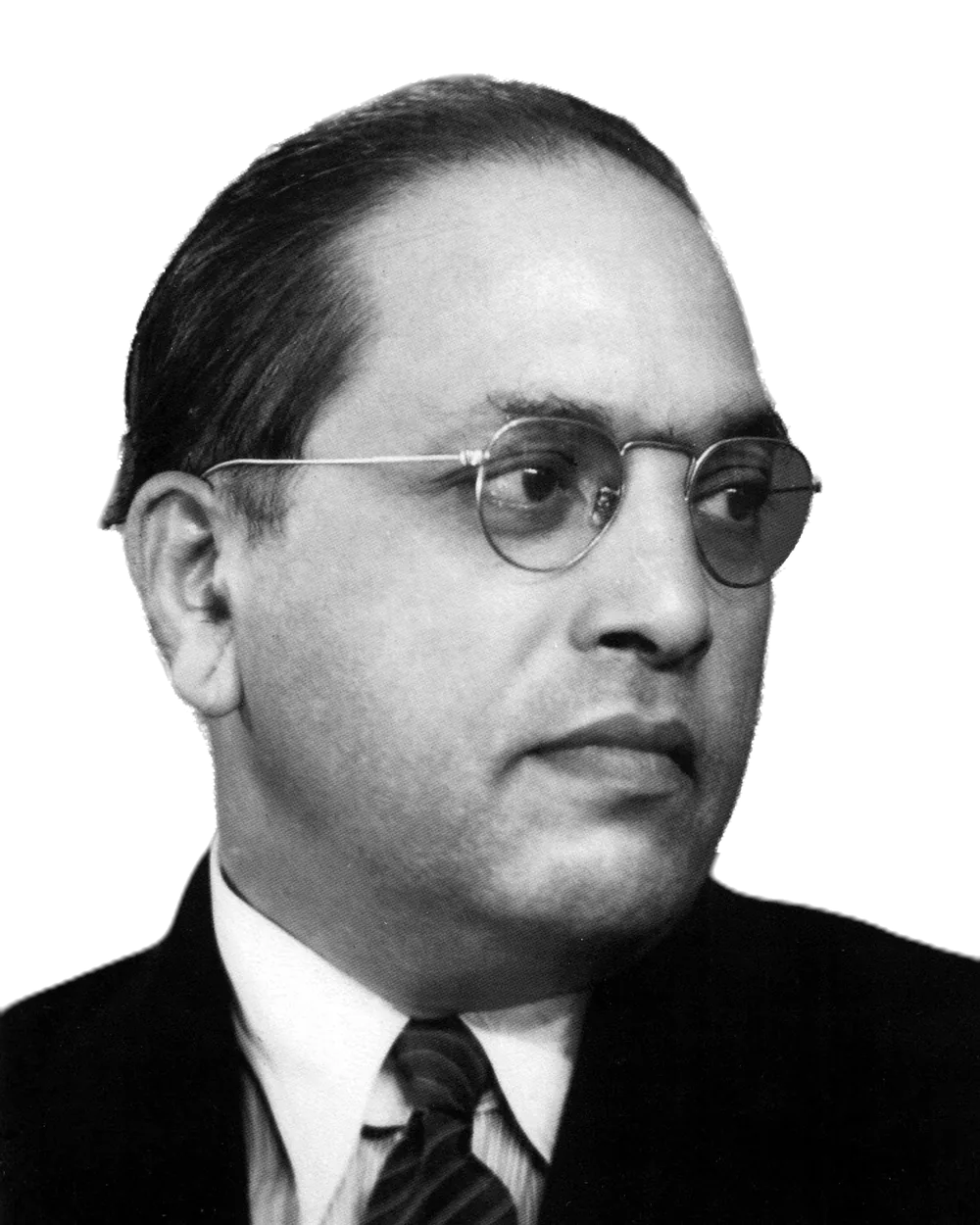 Current Affairs Link8 min read
Only 5.8% Inter-Caste Marriages: Endogamy, Khap Panchayats & Ambedkar’s Diagnosis
IHDS ke mutabik India me inter-caste unions sirf ~5.8% hain. Endogamy ka rule itna strong kyon hai? Ambedkar, khaan-panchayat control, aur Shakti Vahini verdict se samjho.
Padho →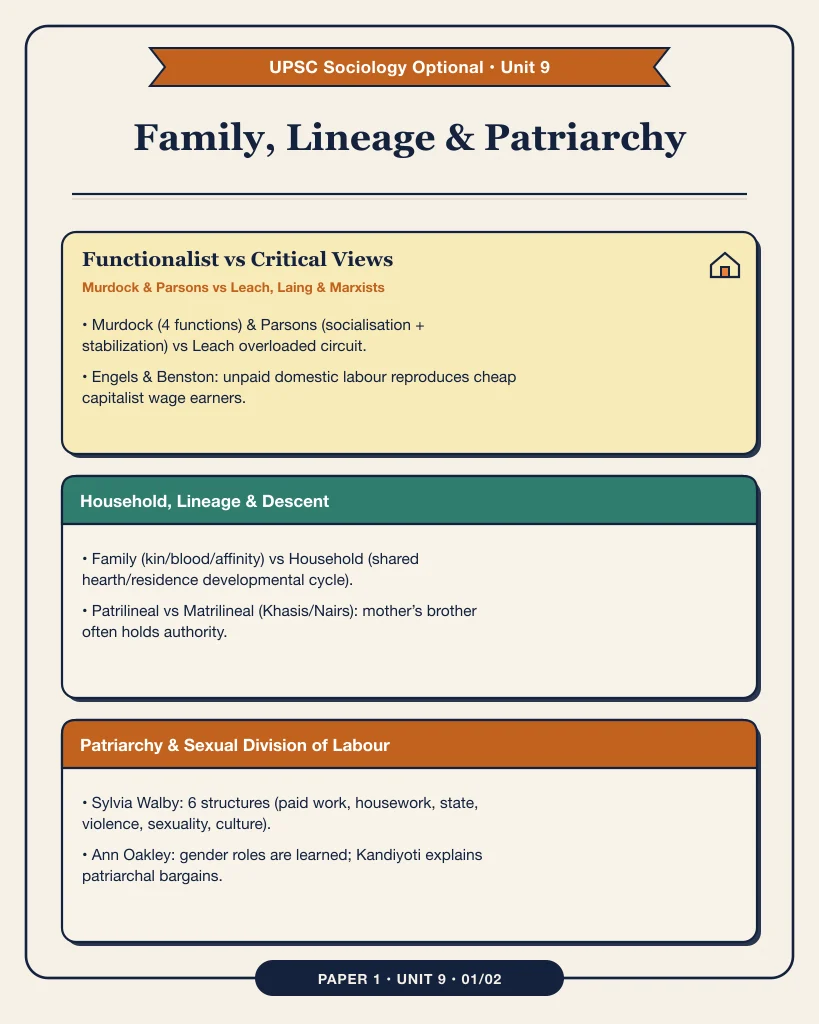 Paper 1 Concepts8 min read
Family vs Household & Kinship: A.M. Shah, Irawati Karve aur Sylvia Walby
Family aur household ek jaise nahi hote. NFHS-5 household size 4.4 dikhati hai, par India me functional jointness, chulha, commensality aur kinship zones ka logic ab bhi alive hai.
Padho →