Multidimensional Poverty vs Extreme Wealth Inequality: Sen, Townsend & NITI MPI
India ne 2013-23 me 24.82 crore logon ko multidimensional poverty se bahar nikala, phir bhi top-1% wealth concentration extreme hai. Sen, Townsend aur NITI MPI ko compare karke exam-ready clarity pao.
📑 Quick Jump: Contents (4) & Syllabus Chapters
Introduction
Poverty aur inequality ko ek hi lens se dekhna UPSC Sociology ke liye risky hai. Ek taraf classical poverty studies income shortage ko core मानती thi; doosri taraf Amartya Sen ne bataya ki poverty sirf paisa kam hone ka naam nahi, balki capabilities ka deprivations hai. Isi line mein Peter Townsend ne relative deprivation ka concept diya: insan tab poor hota hai jab woh society ke standard living se effectively participate nahi kar pata. India ke context mein yeh debate aur sharp ho jaati hai, kyunki NITI Aayog ke National Multidimensional Poverty Index (MPI) ke according 2013-14 se 2022-23 ke beech 24.82 crore log multidimensional poverty se बाहर निकले. Yeh ek major welfare achievement hai. Lekin doosri taraf World Inequality Lab ke estimates dikhate hain ki top 1% wealth concentration ab bhi highly skewed hai, jahan wealth ka bada hissa ek chhote elite group ke paas concentrated hai.
Yahi conceptual puzzle is topic ka heart hai: kya poverty reduction ka matlab inequality reduction bhi hota hai? Not necessarily. A society mein MPI improve ho sakta hai because of better schooling, health access, sanitation, electricity, cooking fuel, bank accounts, housing aur nutrition; par agar asset ownership, inheritance, capital gains, land concentration aur high-end income streams kuch logon ke paas hi jamti rahein, toh extreme wealth inequality persist karti hai. Isliye Poverty aur Inequality ko interchangeable nahi maanna chahiye.
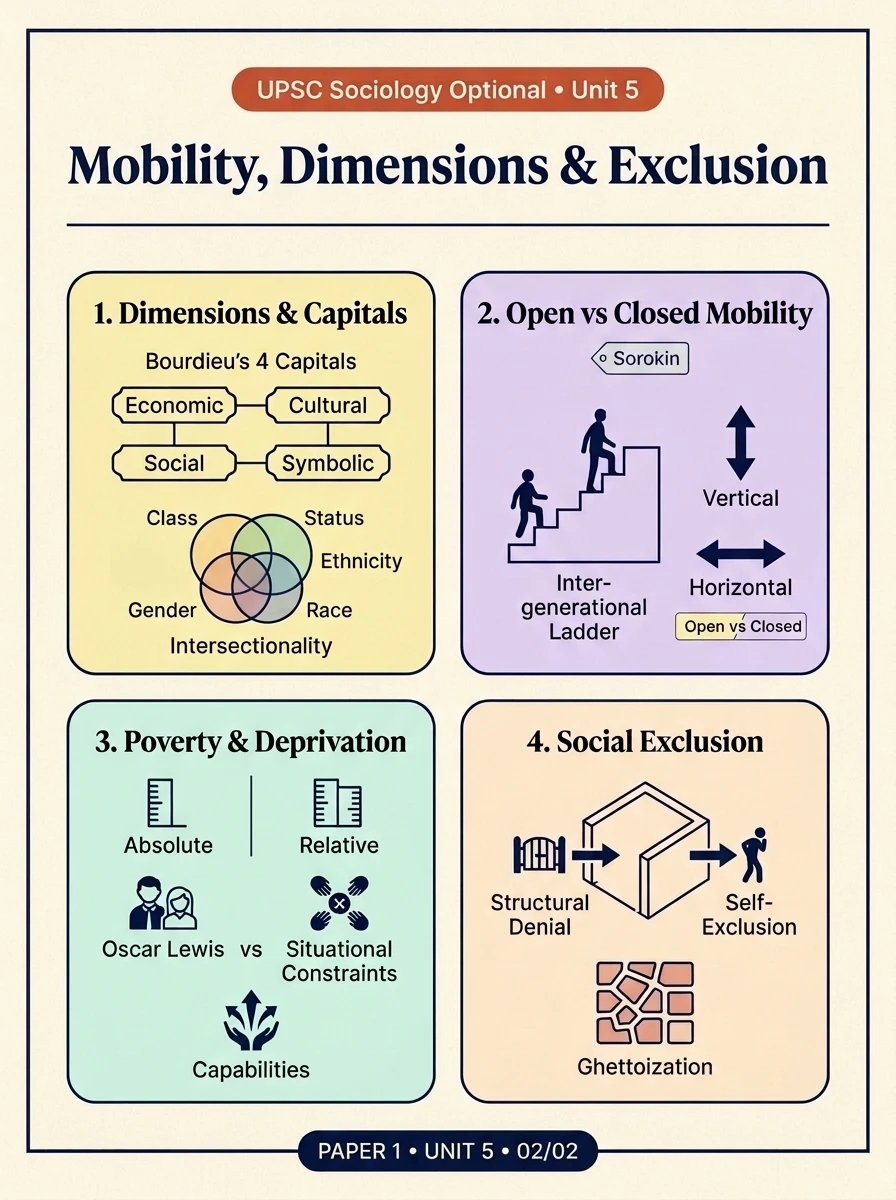
Oscar Lewis ki ‘culture of poverty’ thesis ne poor households ke behaviour par focus kiya tha, lekin later scholars ne us par blame-shifting aur structural blindness ka critique diya. UPSC Sociology mein yeh question isliye important hai kyunki Paper 1 mein stratification, poverty, deprivation, social exclusion aur development theories aati hain; Paper 2 mein Indian state, welfare, caste, tribe, gender, labour, and inequality directly linked hain. Sachar Committee ne Muslim deprivation ko highlight kiya; Xaxa Committee ne Adivasi vulnerability; NFHS-5 aur PLFS inequality ke lived dimensions dikhate hain. Thus, multidimensional poverty aur extreme wealth inequality ko together analyse karna hi contemporary Indian sociology ka most robust approach hai.
Thinkers and Conceptual Contrast
1) Peter Townsend ne poverty ko purely subsistence deprivation se aage le jaakar relative deprivation ke रूप mein define kiya. Uski classic work Poverty in the United Kingdom (1979) ne argue kiya ki log sirf calories ya minimum income ke basis par poor nahi hote; woh tab poor hote hain jab unke paas socially accepted living standards, participation, consumption patterns, aur dignity ke liye resources na hon. Sociology ke liye yeh crucial hai, because poverty is social exclusion as well as material shortage. India mein yeh lens urban slums, migrant labour, women’s unpaid work, aur caste-based exclusion ko samajhne mein useful hai.
2) Amartya Sen ne poverty debate ko aur deepen kiya through capability approach. Unki major works Poverty and Famines (1981) aur Development as Freedom (1999) ne dikhaya ki deprivation ka core issue functionings aur capabilities ka loss hai—yaani log kya kar sakte hain, kya ban sakte hain, aur kya achieve kar sakte hain. Sen ke according poverty ek unfreedom hai. Iska advantage yeh hai ki yeh nutrition, education, health, political voice, aur agency ko ek framework mein laata hai. NITI Aayog ka MPI broadly isi multidimensional logic se inspired hai, though policy operationalisation hamesha capability richness ko fully capture nahi kar pati.
3) Oscar Lewis ki famous book La Vida aur uski culture of poverty thesis ne poverty ko intergenerational behavioural patterns se explain kiya—short-term orientation, low savings, weak institutional trust, aur marginality. Lekin is theory par strong critique aaya. Blaming the poor for their own poverty structural inequalities—landlessness, labour exploitation, caste hierarchy, patriarchy, and state neglect—ko overshadow kar deta hai. Indian context mein yeh especially problematic hai because deprivation often “culture” nahi, unequal power relations ka outcome hota hai.
4) Karl Marx ka class analysis wealth concentration ko samajhne ke liye indispensable hai. Marx ke liye inequality surplus value, ownership of means of production, aur capital accumulation se banti hai. Extreme wealth inequality is not an accident; it is built into capitalist accumulation. WIL ke top-1% concentration data ko Marxian lens se read karein to yeh samajh aata hai ki poverty reduction programs ke baawajood asset ownership ka structure intact reh sakta hai.
5) T.H. Marshall aur social citizenship ka idea bhi relevant hai. Unki book Citizenship and Social Class (1950) ke through state ki responsibility samjhi ja sakti hai: civil, political, aur social rights ke bina poverty reduction sustainable nahi hoti. India mein welfare schemes, food security, health entitlements, and education access ko citizenship framework mein dekhna useful hai.
Analytical contrast yeh hai: Townsend social participation ko centre mein rakhta hai, Sen capability freedom ko, Lewis culture ko, aur Marx structure/class ko. UPSC answer mein best synthesis yeh hoti hai ki poverty = capability deprivation + relative exclusion; wealth inequality = asset and power concentration. Dono related hain, but identical nahi.
| Aspect | Multidimensional Poverty | Extreme Wealth Inequality |
|---|---|---|
| Core concept | Basic deprivations across health, education, living standards | Income aur asset concentration ka extreme skew |
| Main thinker | Sen, Townsend | Marx, Piketty, WIL-style distributional analysis |
| Key indicator | NITI MPI, NFHS-5, school access, sanitation, nutrition | Top 1% wealth share, billionaire concentration, inheritance |
| Policy focus | Targeted welfare, capability expansion, service delivery | Taxation, redistribution, labour rights, asset reforms |
Indian Data and Evidence
India ka contemporary evidence base is debate ko bahut concrete banata hai. Sabse pehle, NITI Aayog MPI: official estimates ke अनुसार 2013-14 se 2022-23 ke beech 24.82 crore log multidimensional poverty se bahar nikle. Yeh achievement mainly improved access to sanitation, electricity, cooking fuel, bank accounts, housing, school attendance, aur nutrition-related indicators se driven thi. NITI MPI shows that poverty reduction can happen even when headline income gaps remain, because deprivation multiple dimensions mein cut hoti hai.
Lekin isi saath NFHS-5 ne malnutrition, anaemia, stunting, underweight children, aur women’s health disparities ko sharply highlight kiya. A lot of “poverty reduction” is still fragile when health capability weak ho. PLFS labour market data bhi dikhata hai ki informalisation, low wages, and precarious employment continue to shape household vulnerability. So, a household may move out of MPI poverty yet remain one illness, one job loss, or one debt shock away from falling back.
Caste and tribe angles ko ignore nahi kiya ja sakta. Xaxa Committee ne Scheduled Tribes ki structural vulnerabilities—land alienation, displacement, weak livelihood security, low human development—par focus kiya. Sachar Committee ne Muslim community ke educational, occupational, and asset deficits ko documented kiya. These are classic examples of how deprivation is socially produced, not merely individually chosen. Adivasi and Muslim households often face layered disadvantage that MPI can capture partially, but not completely unless social exclusion is analysed deeply.
Judicial and policy context mein SC judgments on food security and dignity relevant rehte hain, especially the broader jurisprudence that treats food, health, shelter, and education as linked to Article 21. Welfare expansion in India—PDS, MGNREGA, PMAY, Ujjwala, Ayushman Bharat, Jal Jeevan—has improved living standards, but outcomes are uneven across states and social groups.
Ab wealth inequality ki taraf aayein: World Inequality Lab (WIL) estimates show that India mein wealth aur income concentration highly unequal hai, aur top 1% aur top 10% ke paas disproportionate share hai. This matters because ownership of land, financial assets, corporate equity, and inheritances creates intergenerational advantage. In villages, landholding patterns; in cities, real estate and financial assets; and at the national level, capital market gains—these all reinforce elite accumulation.
Ethnographic studies of informal workers, slum dwellers, women self-help groups, and migrant families repeatedly show that decline in deprivation indicators does not automatically mean equality or dignity. A family may have an LPG connection, but still lack stable employment, safe housing, or healthcare affordability. Hence, Indian sociology should read MPI as a necessary but insufficient measure. The real challenge is to combine poverty reduction with redistribution, social justice, and asset reform.
🔑 Relative Deprivation
Aisa condition jahan insan apni society ke accepted standards ke comparison mein deprived hota hai, even if absolute survival level somehow meet ho raha ho.
Critical Evaluation
NITI MPI important hai, but it has limits. First, MPI often counts deprivations through set indicators, but lived poverty is deeper: caste humiliation, gender violence, unpaid care burden, disability, and informal work insecurity ko fully quantify karna hard hota hai. Second, poverty reduction metrics can create a success narrative while wealth concentration, political influence, and intergenerational privilege remain untouched. Isliye sirf multidimensional poverty decline ko development ka final proof nahi maana ja sakta.
Townsend aur Sen strong frameworks dete hain, but they too need supplementation. Townsend ka relative deprivation measure social standards par dependent hai; rapidly unequal societies mein “normal” consumption bhi distorted ho sakta hai. Sen ka capability approach broad hai, lekin policy makers isse often narrow indicators mein reduce kar dete hain. Oscar Lewis ki culture thesis useful cautionary tale hai, but it is too easily misused to blame the poor. Structural theorists like Marx remind us that wealth inequality is rooted in ownership relations, not merely lifestyle gaps.
A nuanced synthesis yeh hogi: India mein poverty is best understood as capability deprivation under conditions of social exclusion, while extreme wealth inequality is a power and asset concentration problem. Dono ek dusre se connected hain because wealth concentration shapes public policy, access to quality education, health markets, housing, and even social networks. So, the right sociological answer is not “poverty has disappeared” nor “nothing has changed,” but that India has made real gains in deprivation reduction while leaving deeper distributive injustice largely intact. Exam mein yeh balanced line hi high-scoring hoti hai.
Answer kaise likhein
- Sen aur Townsend ke through explain karo ki multidimensional poverty sirf income gap nahi, health, education, dignity aur social participation ka issue hai.
- NITI MPI data ka use karke dikhाओ ki India ne 2013-23 mein major deprivation reduction achieve kiya, especially basic services aur living standards mein.
- WIL top-1% concentration se contrast karke argue karo ki poverty reduction ke saath inequality reduction zaroori nahi hota; elite accumulation alag process hai.
- Policy synthesis do: universal basic services, progressive taxation, quality public education-health, labour protection, and asset redistribution.
Is Blog Se Jude Syllabus Chapters
Every Unit Note + Topic-Wise PYQ Mapped (English + Hinglish)
Paper 1 (10 Units) aur Paper 2 (15 Units) — Complete structured notes, thinkers, mind maps & 597 solved PYQs ek saath.
Khud ko test karo
Is post se 3 sawal
0 / 3 attempted
1. Peter Townsend ke according poverty ka best indicator kya hai?
2. Amartya Sen ki capability approach ka main focus kya hai?
3. NITI Aayog MPI aur WIL data ko together padhne ka sabse sahi conclusion kya hai?
FAQ
Aksar poochhe jaane wale sawaal
- Kya multidimensional poverty aur wealth inequality same cheez hain?
- Nahi. Poverty deprivation ka measure hai; wealth inequality asset aur power concentration ko dikhati hai. Dono related hain, but identical nahi.
- Sen aur Townsend mein basic difference kya hai?
- Townsend relative deprivation aur social participation par focus karta hai, jabki Sen capabilities aur freedoms par.
- Oscar Lewis ki theory kyun controversial hai?
- Kyuki culture of poverty thesis structural factors ko underplay karke poor households par blame shift kar sakti hai.
UPSC PYQs
Is topic ke Previous Year Questions
- 2025 · P1
Compare capability deprivation approach with that of social capital deprivation in understanding chronic poverty. (10 marks)
- 2024 · P1
Discuss the dimensions of power in the construction and maintenance of social hierarchies in a society. (10 marks)
- 2023 · P1
How is poverty a form of social exclusion? Illustrate in this connection the different dimensions of poverty and social exclusion. (10 marks)
- 2022 · P2
Evaluate how Multidimensional Poverty (MPI) and Amartya Sen’s capability deprivation deepen our understanding of chronic Indian poverty beyond calorie lines. (20 marks)
Roz ke Sociology notes Telegram pe paao
Daily current affairs, PYQ linkages aur direct mentorship support Telegram par.
Related
Aur padho
 Strategy & Toppers10 min read
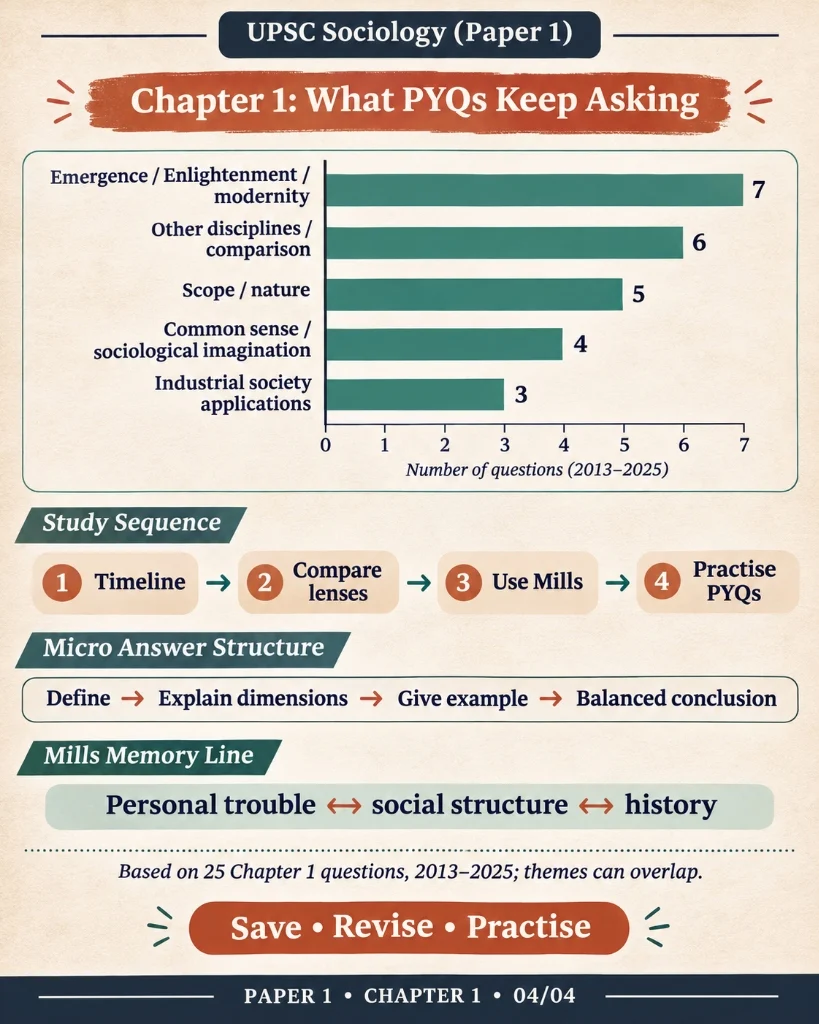
Last 10 Years UPSC Sociology PYQ Trends: Dynamic Paper 1 & Current-Linked Paper 2
Last 10 years me UPSC Sociology PYQ rote definitions se हटकर applied, India-linked ban gaye hain. Gig work, COVID kinship, AI alienation aur caste census trends Paper 1/Paper 2 ko rewrite kar rahe hain.
Padho →- Paper 2 India8 min read
Development, Displacement & Michael Cernea’s Impoverishment Risk Model in India
India mein development ka dark side displacement hai: Walter Fernandes ke according 60M+ log displaced hue, jismein lagbhag 40% tribal the. Cernea ka IRR model samjhata hai kaise landlessness se social disarticulation tak nayi impoverishment banti hai.
Padho → 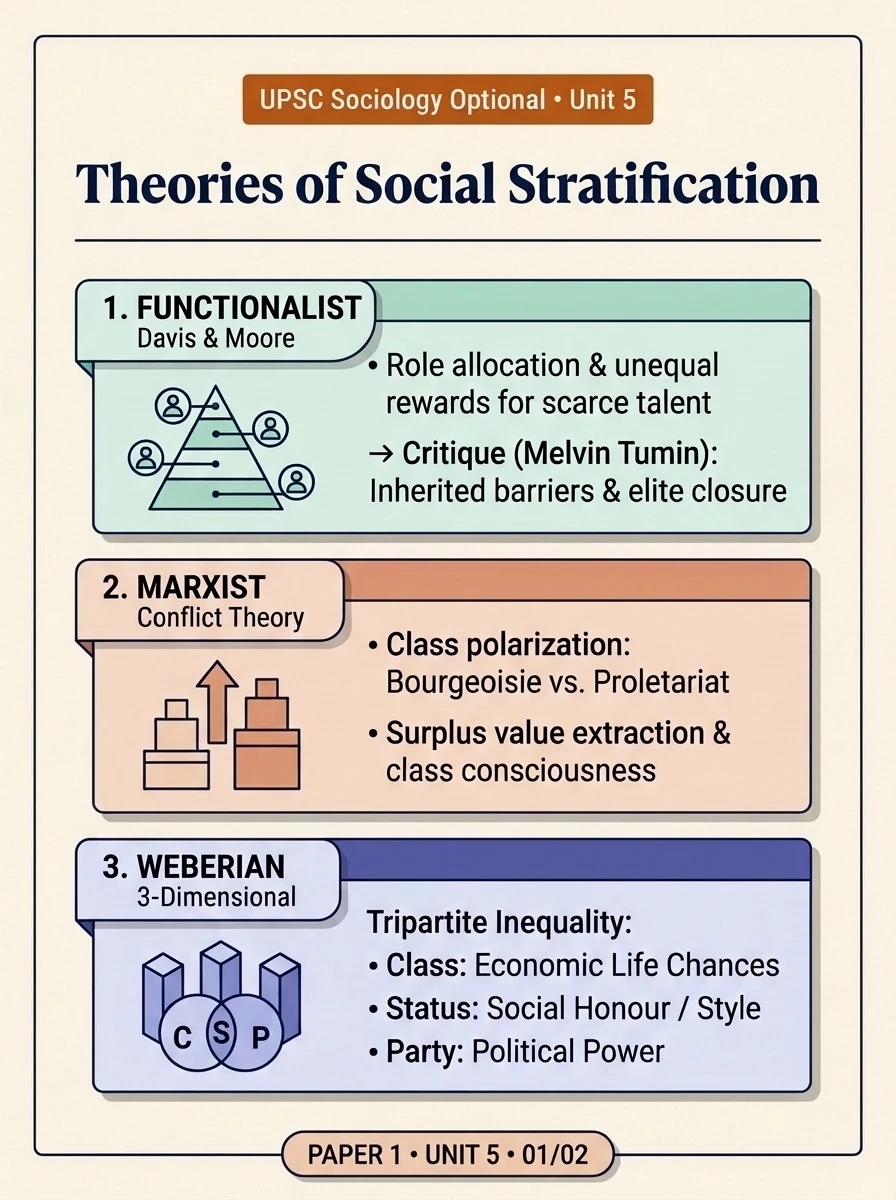 Paper 1 Concepts9 min read
Davis-Moore Functionalism vs Melvin Tumin & Marx on Social Inequality
Davis-Moore kehte hain inequality functional hai; Tumin aur Marx bolte hain inherited privilege unjust aur dysfunctional. Oxfam/WIL ke hisab se India ka top 1% 40.1% wealth control karta hai.
Padho →