Vilfredo Pareto: Lions, Foxes, Residues & Circulation of Elites in India
Pareto ka elite theory India me upper-caste Congress dominance se OBC/regional elites ke rise tak samajhne ka lens deta hai. NFHS-5, PLFS aur NCRB data power shift ko reveal karte hain.
📑 Quick Jump: Contents (9) & Syllabus Chapters
Vilfredo Pareto: Elite Theory ka Indian Puzzle
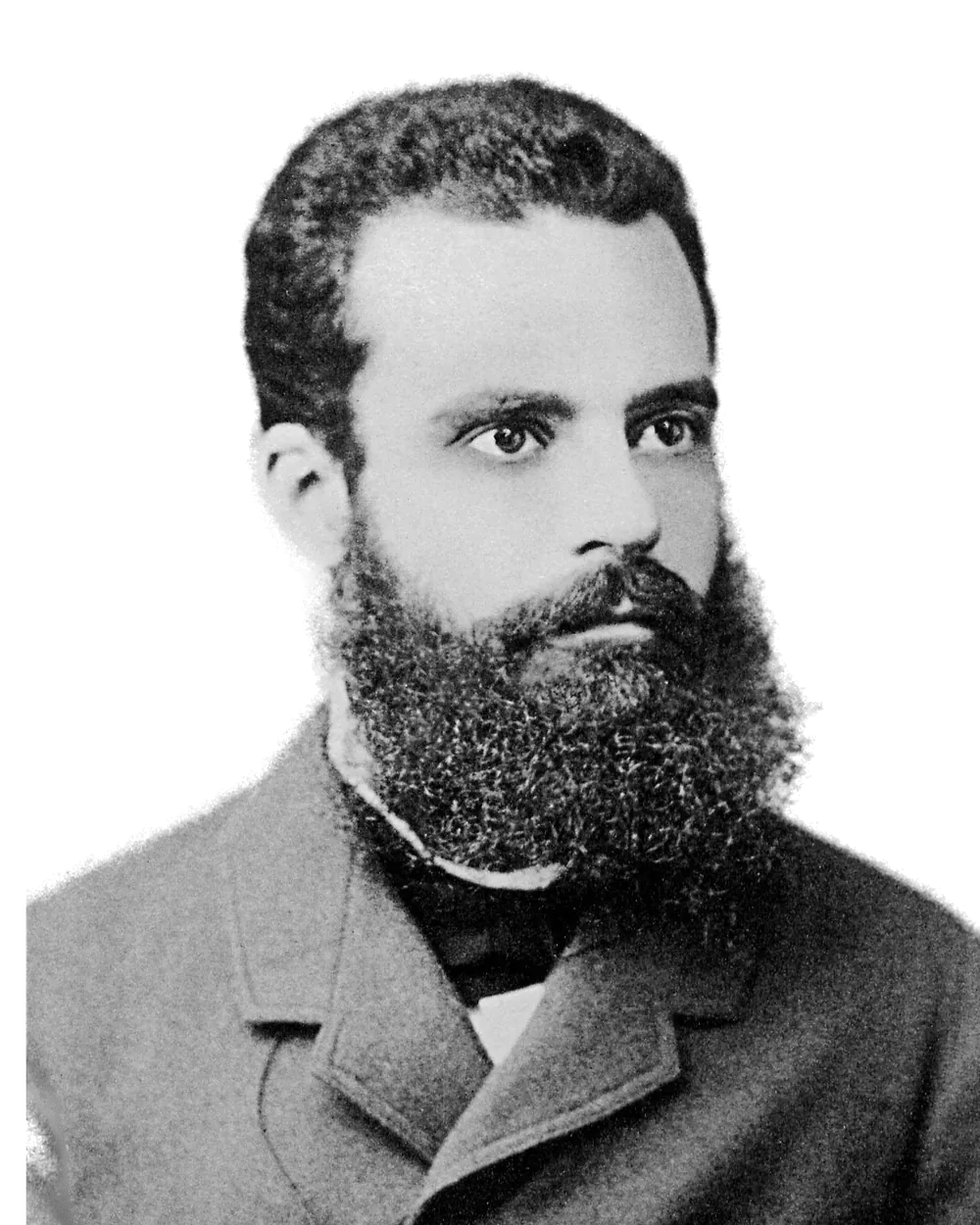
Pareto ki sociology ek uncomfortable but powerful question uthati hai: kya democracy sach me rule by the people hoti hai, ya phir bas elites ka circulation? Unki famous work Mind and Society (1916) me Pareto ne kaha ki society me power kabhi truly diffuse nahi hoti; bas ruling group ka composition change hota rehta hai. Isliye unka “circulation of elites” concept UPSC Sociology me bahut important hai, especially jab India jaise mass democracy ko dekha jaye.
India ka political history is puzzle ko aur sharp banata hai. Independence ke baad Congress dominated by upper-caste, English-educated, urban-nationalist elite thi. But 1960s ke baad regional parties, socialist mobilization, Mandal politics, OBC assertion, Dalit movements, aur coalition era ne power structure ko transform kiya. Surface level par lagta hai ki elite change ho gaye; deeper level par question hai: kya sirf old elites replace hue ya nayi elites ne same domination logic adopt kar li?
Pareto ke according elites do types ke hote hain: “lions” aur “foxes.” Lions force, hierarchy aur stability ko represent karte hain; foxes manipulation, flexibility aur innovation ko. Indian politics me bhi kabhi strongman politics, caste arithmetic, patronage networks, aur charismatic leadership lion-like dikhte hain; jabki coalition bargaining, media management, identity engineering aur technocratic branding fox-like features dikhate hain.
Lekin Indian context Pareto ko simple repetition nahi banata. Here, democracy, caste, reservation, federalism aur mass electoral participation elite circulation ko broaden bhi karte hain aur constrain bhi. Isliye Pareto ka framework useful hai, but insufficient if we ignore caste, class, gender, region and state capacity. UPSC answer me yahi conceptual tension central rakhni chahiye: India me elite circulation hua hai, but elite domination khatam nahi hui.
Thinkers: Pareto se Bottomore tak
1) Vilfredo Pareto
Pareto ne Mind and Society (1916) me society ko “non-logical action” aur elite circulation ke through explain kiya. Unke liye history me rational progress ka linear model nahi hai; instead ruling elite periodically decay hoti hai aur nayi elite uski jagah leti hai. His famous distinction between lions and foxes is crucial: lions are coercive, conservative and order-oriented; foxes are cunning, adaptable and innovative. Indian politics me lions ko aap authoritarian style, centralized party control, aur strong leadership me dekh sakte ho; foxes ko coalition politics, tactical alliances, media-savvy campaigns, aur identity rebranding me.
2) Gaetano Mosca
Mosca ki The Ruling Class elite theory ko institutional form deti hai. Unka argument tha ki har society me ek organized minority rule karti hai over an unorganized majority. Pareto jahan psychological types par focus karte hain, Mosca political organization aur minority rule par zyada emphasis karte hain. India me Mosca ka lens useful hai because political parties, bureaucracy, caste networks aur business lobbies collectively ruling class bana dete hain. Mosca gives the structural side; Pareto gives the circulation and style side.
3) Robert Michels
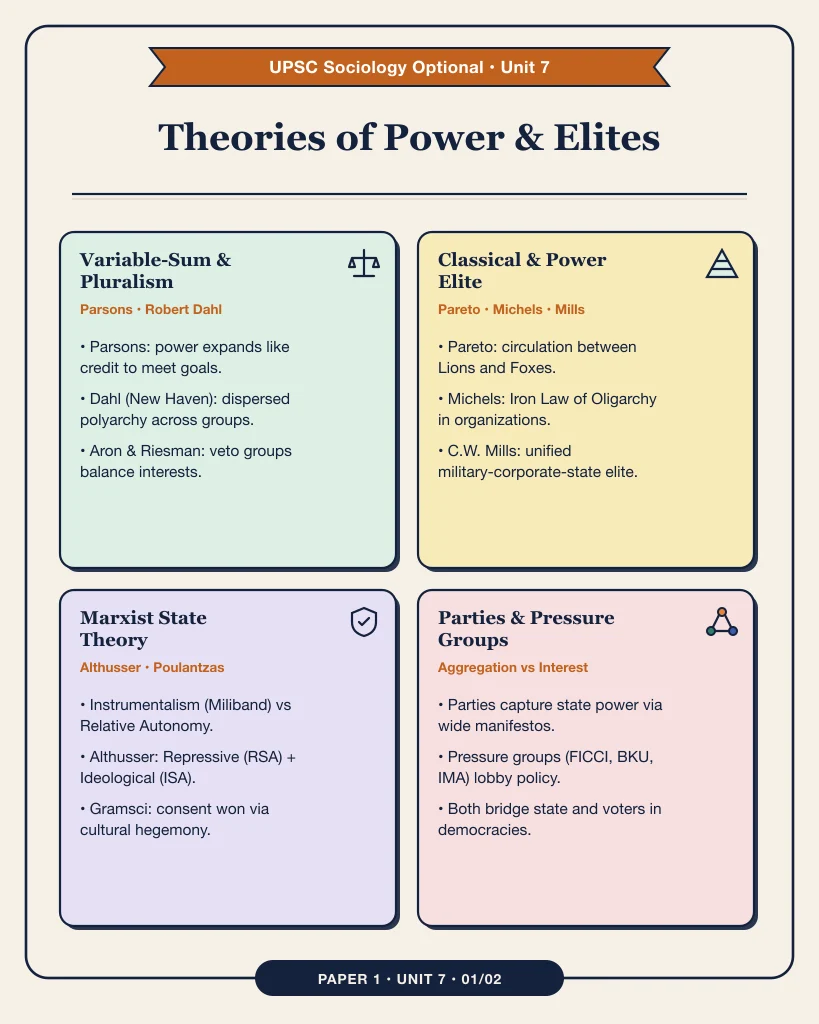
Michels ki Political Parties me famous Iron Law of Oligarchy milti hai: even democratic organizations eventually oligarchic ho jati hain because leadership, expertise, and organization create concentration of power. Indian parties—whether Congress, BJP, regional parties, ya even student unions—often show this tendency. Candidate selection, funding, ticket distribution, and agenda-setting top leadership ke hands me concentrated ho jata hai. Michels is especially valuable to explain why mass parties bhi elite capture se bach nahi paati.
4) T.B. Bottomore
Bottomore ne elite theory ko blind acceptance se save kiya. Unki book Elites and Society me wo kehte hain ki elite theory ko class analysis, institutions aur democracy ke saath read karna chahiye. Unke according pure circulation ka claim underplay karta hai structural inequality. India me ye critique aur strong ho jata hai because caste hierarchy, land ownership, gender exclusion aur access to education elite recruitment ko shape karte hain. Bottomore se aap answer ko balance kar sakte ho: elite change hua, but elite society remain kar sakti hai.
5) C. Wright Mills
Though not a classical elite theorist in the same narrow sense, Mills’ The Power Elite helps compare Indian power structures with a network of political, military and corporate elites. India me crony capitalism, lobbying, and the nexus of politicians, bureaucrats and business groups Mills-style power bloc ko indicate karte hain. Unka contribution Pareto ko modern power analysis se connect karta hai.
Analytical contrast: Pareto = circulation + psychological residues; Mosca = organized minority rule; Michels = organizational oligarchy; Bottomore = class/democracy critique; Mills = institutional power bloc. Is contrast se aap Indian politics ko oversimplify kiye bina explain kar sakte ho.
| Aspect | Pareto | Indian Political Reality |
|---|---|---|
| Power ka nature | Elite rule is inevitable; masses rarely directly govern. | Elections widen participation, but decision-making still elite-dominated rehti hai. |
| Elite change | Circulation of elites via replacement of declining ruling groups. | Upper-caste Congress elite se OBC/regional elites ka rise, but domination logic persists. |
| Style of rule | Lions = coercion, order; Foxes = manipulation, adaptability. | Strongman leadership and coalition pragmatism dono Indian politics me visible hain. |
| Main limitation | Underplays class, caste and institutions. | Reservation, federalism, caste mobilization aur party system elite composition ko deeply reshape karte hain. |
Indian Evidence: Elite Circulation ka Ground Truth
Pareto ko India me prove ya challenge karne ke liye empirical evidence zaroori hai. Political transition ka clearest evidence 1967 ke baad Congress dominance ke fragmentation me dikhta hai, jab regional parties aur anti-Congress coalitions ne space capture kiya. Later, Mandal era ne backward caste assertion ko institutionalized kiya. Bihar me Lalu Prasad Yadav aur UP me Mulayam Singh Yadav/Mayawati jaise leaders ne old upper-caste political monopoly ko challenge kiya. Ye elite replacement ka classic case hai, but it also shows a new elite formation around caste leadership, patronage and symbol politics.
Mandal Commission findings ne backward classes ko political visibility di. Indra Sawhney v Union of India (1992) ne reservations ko constitutional legitimacy di, though creamy layer concept introduced hua. This is crucial because state-backed inclusion ne elite recruitment ko broaden kiya, but social inequality fully erase nahi hui.
Sachar Committee (2006) ne Muslim socio-economic backwardness ko document kiya, showing how elite access remains unequal across communities. Xaxa Committee (2014) ne Adivasi marginalisation ko foreground kiya, especially land alienation and low representation in governance. These reports show that Pareto’s circulation is uneven: some groups enter elite spaces, others remain structurally excluded.
Data bhi power shift ko support karta hai. NCRB reports consistently show underrepresentation of marginalized groups in prison, policing and justice-facing institutions must be read with caution, but they reflect state-contact inequality. PLFS shows persistent disparities in regular salaried work and labor force participation, especially for women and marginalized castes. NFHS-5 indicates continued gaps in nutrition, anemia and health access by caste, wealth and region. Political elite may circulate, but social elite reproduction continues through human capital gaps.
Election studies and ethnographies are equally important. Yogendra Yadav and Sanjay Kumar have shown the rise of OBC political consciousness and democratic upsurge. Christophe Jaffrelot’s work on the rise of Other Backward Classes and the “silent revolution” is central to understanding caste-based elite circulation. Paul Brass and Atul Kohli help explain party system changes and state power. In field studies, strong local dominance by dominant castes in village panchayats, contractor networks, and district-level brokerage often shows that national elite circulation does not automatically trickle down.
A very relevant contemporary indicator is Oxfam-type inequality reporting and WIL narratives on leadership gaps, which show that wealth, gender and caste still structure access to elite positions. Hence, India exemplifies Pareto with a twist: elite circulation has occurred, but circulation is partial, segmented and often caste-mediated.
🔑 Circulation of elites
Society me ruling elite ka periodic replacement; old elite decline karti hai aur nayi elite power capture karti hai.
Critique: Pareto ko kaise Nuance karein
Pareto ki theory ka biggest strength simplicity hai, but wahi uski biggest limitation bhi hai. First, it can become overly cyclical and ahistorical. India me elite change sirf internal decay se nahi hua; it was shaped by mass mobilization, anti-caste struggles, reservation policy, state expansion, and democratic competition. Pareto ka model caste hierarchy ko sufficiently explain nahi karta.
Second, he underplays material inequality. Bottomore ka critique important hai: elite theory power ke distribution ko dikhati hai, but class structure, land relations, and capitalist accumulation ko central nahi banati. India me political elites often business elites ke saath align hote hain, which means circulation can occur within an unchanged elite system.
Third, Pareto psychological labels—lions and foxes—helpful hain, but they risk over-personalizing politics. Indian elite recruitment me institutions matter: party nomination, bureaucracy, judiciary, media ownership, and corporate funding. Michels ka oligarchy thesis aur Mills ka power elite perspective is gap ko better capture karte hain.
Balanced synthesis yeh hai: Pareto is best used as a diagnostic lens, not a complete explanation. India me elite circulation real hai—upper-caste Congress to OBC/regional elites, technocratic managers, business-backed political actors—but this circulation is layered over persistent social exclusion. Therefore, the best answer is neither “complete change” nor “same elite forever,” but “circulation within structural inequality.” यही nuanced conclusion UPSC me high marks दिलाती है.
Answer kaise likhein
- Pareto ke अनुसार society me ruling elite ka circulation hota rehta hai; India me Congress-era upper-caste elite se OBC/regional elites ka rise iska strong example hai.
- Lions aur foxes metaphor se aap Indian politics me coercive leadership aur tactical coalition politics ko explain kar sakte ho.
- Mosca aur Michels ke through elite rule aur oligarchic party structure ko support kijiye; Bottomore se caste/class critique add kijiye.
- NFHS-5, PLFS, Sachar, Xaxa aur Indra Sawhney jaise evidence se दिखाइए ki political inclusion बढ़ी hai, but social inequality abhi bhi persistent hai.
Is Blog Se Jude Syllabus Chapters
Every Unit Note + Topic-Wise PYQ Mapped (English + Hinglish)
Paper 1 (10 Units) aur Paper 2 (15 Units) — Complete structured notes, thinkers, mind maps & 597 solved PYQs ek saath.
Khud ko test karo
Is post se 3 sawal
0 / 3 attempted
1. Pareto ki famous book kaunsi hai jisme elite circulation discuss hota hai?
2. Michels ka Iron Law of Oligarchy kya bolta hai?
3. Pareto ke lions and foxes ka best match kya hai?
FAQ
Aksar poochhe jaane wale sawaal
- Pareto ki elite theory ka core idea kya hai?
- Society me ruling elite ka periodic replacement hota rehta hai; mass rule rarely direct hota hai.
- India me Pareto ko kaise apply karte hain?
- Upper-caste Congress elite se OBC/regional elites ke rise, plus coalition politics aur caste mobilization ke through.
- Bottomore ne Pareto par kya critique kiya?
- Unhone कहा कि elite theory class, institutions aur structural inequality ko underplay karti hai.
UPSC PYQs
Is topic ke Previous Year Questions
- 2025 · P1
What would you identify as the similarities and differences in the elite theories of Mosca, Michels and Pareto? Discuss their main/crucial issues. (10 marks)
- 2025 · P1
Are pressure groups a threat to or a necessary element of democracy? Explain with suitable illustrations. (10 marks)
- 2024 · P1
Discuss the dimensions of power in the construction and maintenance of social hierarchies in a society. (10 marks)
- 2023 · P1
What, according to Robert Michels, is the iron law of oligarchy? Do lions and foxes in Vilfred Pareto's theory, essentially differ from each other? Substantiate. (10 marks)
Roz ke Sociology notes Telegram pe paao
Daily current affairs, PYQ linkages aur direct mentorship support Telegram par.
Related
Aur padho
 Paper 1 Concepts1 min read
Max Weber: Bureaucracy, Ideal Types aur Iron Cage of Rationality
UPSC IAS/IPS administration ke context mein Max Weber ke Ideal Type of Bureaucracy, 3 Authority types aur Robert Merton ke dysfunction critique ko samjho.
Padho →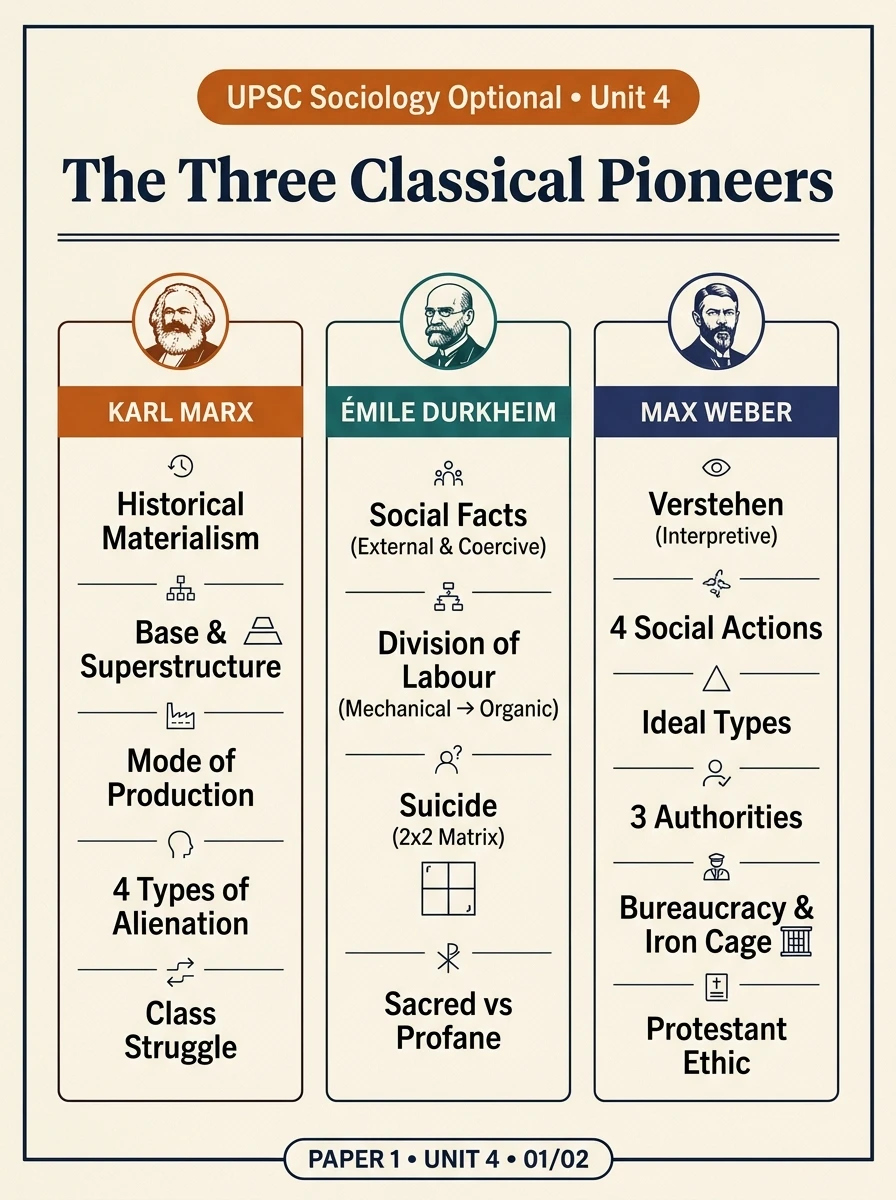 Answer Writing9 min read
How to Use Western & Indian Thinkers Together in UPSC Sociology Paper 2
Western theory ko India par mechanically apply mat karo. Marx-A.R. Desai, Weber-Beteille, Durkheim-Srinivas bridge karke agrarian class, caste-status-power aur religion ke Indian case studies ko data-backed way me answer karo.
Padho → Thinkers8 min read
Yogendra Singh: Modernization of Indian Tradition & Integrated Orthogenetic Framework
Yogendra Singh ne dikhaya ki Indian modernization West ka copy-paste nahi, balki tradition ke andar se nikalti synthesis hai. Digital India, NFHS-5 aur PLFS data se yeh debate aur relevant ho gayi hai.
Padho →