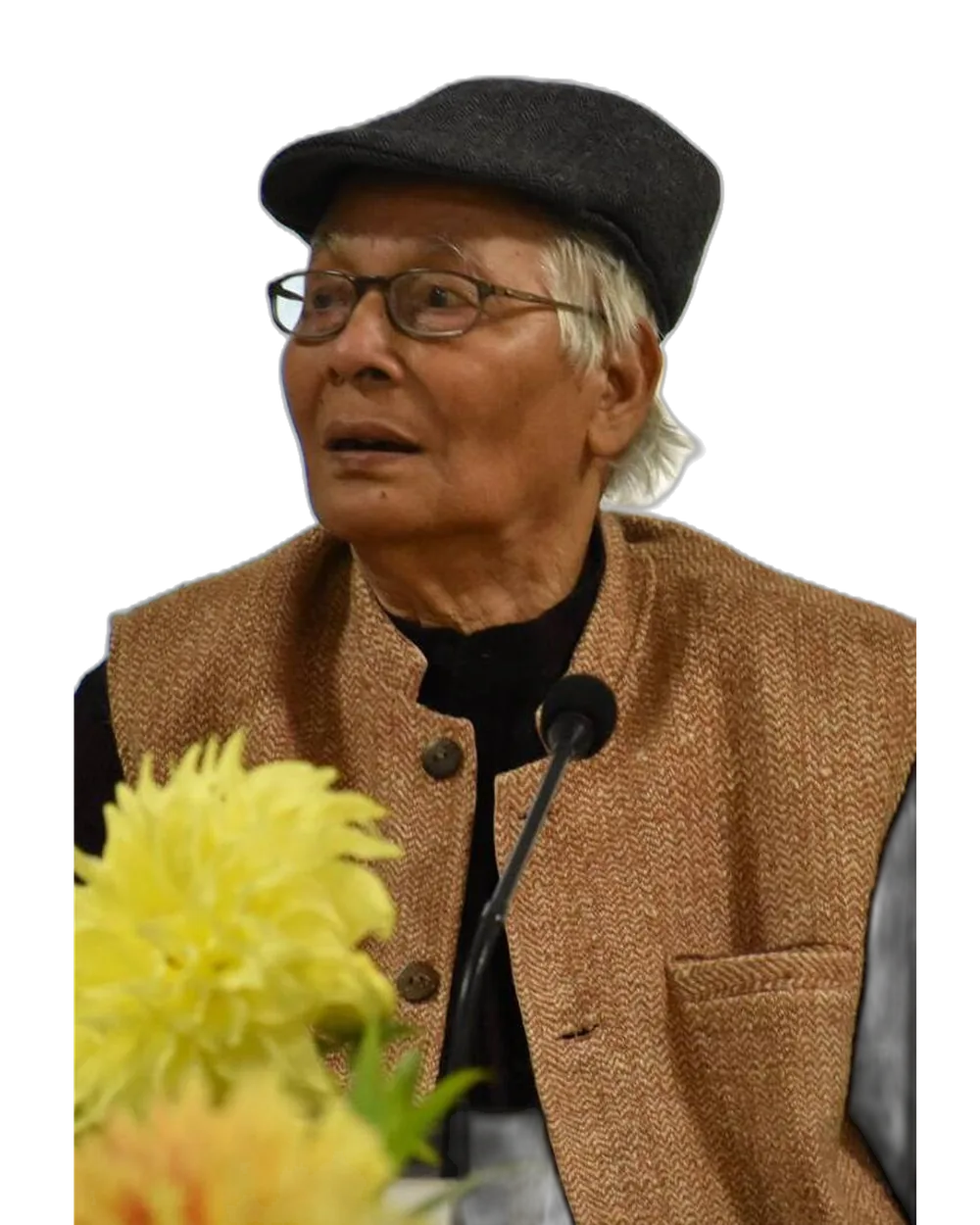
Yogendra Singh: Modernization of Indian Tradition & Integrated Orthogenetic Framework
Yogendra Singh ne dikhaya ki Indian modernization West ka copy-paste nahi, balki tradition ke andar se nikalti synthesis hai. Digital India, NFHS-5 aur PLFS data se yeh debate aur relevant ho gayi hai.
📑 Quick Jump: Contents (4) & Syllabus Chapters
Introduction: Tradition vs Modernity ka Indian Puzzle
Yogendra Singh sociology of India mein ek central name hain because he challenged the simple binary of “tradition = backwardness” and “modernity = West.” Unki famous intervention, Modernization of Indian Tradition, ne yeh argue kiya ki Indian society mein change ek linear rupture nahi, balki layered transformation hai. Yahan tradition ko dead residue nahi, balki active cultural resource maana gaya. Isi liye India ka modernization na to pure Western imitation hai, na pure continuity; it is a selective synthesis of inherited values, institutions, and new structural pressures.
Is debate ka importance UPSC Sociology Paper 2 mein bahut zyada hai because Indian society ko samajhne ke liye aapko culture aur structure dono dekhne padte hain. Yogendra Singh ka integrated orthogenetic framework yeh batata hai ki change kabhi endogenous cultural reworking se aata hai, kabhi exogenous structural forces se, aur often dono ek saath operate karte hain. Isi context mein unka 2x2 matrix helpful hai: Cultural vs Structural change, and Orthogenetic vs Heterogenetic change. Orthogenetic ka matlab hota hai society ke apne internal normative-civilizational sources se transformation; heterogenetic ka matlab external influence, especially colonialism, market, state, media, and global flows.
Yeh lens aaj Digital India ko samajhne mein aur relevant ho gaya hai. Mobile penetration, UPI, online education, social media activism, and platform economy ne Indian tradition ko erase nahi kiya; instead, many times they have reconfigured caste, kinship, gender, religion, and consumption. Example ke liye, pilgrimage booking apps, WhatsApp-based religious networks, online matrimonial platforms, and digital caste assertion show that modernization in India is deeply mediated by tradition. UPSC ke liye core insight yahi hai: Indian modernization is not “tradition vs modernity,” but “tradition in modern forms.”
Thinkers: Conceptual Lineage and Analytical Contrast
Yogendra Singh ko samajhne ke liye unke intellectual context ko dekhna zaroori hai. Unka sabse famous contribution Modernization of Indian Tradition hai, jahan unhone modernization ko cultural reinterpretation aur structural differentiation dono ke roop mein read kiya. Unka core argument yeh tha ki Indian tradition rigid nahi; it is adaptive, internally plural, and capable of generating modern institutions without total cultural rupture. Singh ne colonialism, nationalism, education, urbanization, and bureaucracy ko transformation ke key drivers ke roop mein dekha.
Iske contrast mein Robert Redfield ka Little Community aur The Little and Great Tradition framework aata hai. Redfield ne peasant societies mein “little tradition” ko local, oral, folk, village-level cultural system maana, aur “great tradition” ko classical, textual, pan-regional tradition. Milton Singer ne is model ko India par apply karke argued ki Indian civilization mein great tradition aur little tradition continuously interact karte hain. Temples, festivals, pilgrimage, Sanskritization, aur local deity cults is interaction ke classic examples hain. Yogendra Singh ne in ideas ko accept kiya, but unhe wider modernization theory mein expand kiya. Unka focus sirf cultural layering par nahi tha, balki institutions aur power structures par bhi tha.
M. N. Srinivas is debate mein crucial hain. Unka concepts—Sanskritization, Westernization, dominant caste—show karte hain ki Indian society mein status mobility aur cultural change endogenous bhi ho sakte hain aur exogenous bhi. Singh ne Srinivas ke micro-sociological insights ko macro-historical modernization framework mein place kiya. Srinivas ke yahan emphasis caste mobility aur village studies par tha; Singh ke yahan emphasis whole civilization's transformation par tha.
T. K. Oommen aur Andre Béteille ko bhi contrast ke liye yaad rakho. Oommen ne pluralism, inequality, aur civil society par kaam kiya, jahan modernity ko homogenizing force nahi, contested field mana. Béteille ne equality, hierarchy, aur stratification ko highlight karke dikhaya ki modern institutions ke andar bhi traditional inequalities survive karti hain. In both cases, Singh ka synthesis useful hai because it avoids both extremes: one, the nationalist romanticism that tradition is pure and self-sufficient; two, the modernist assumption that development automatically dissolves tradition.
UPSC answer mein aapko yeh contrast clearly dikhana chahiye: Redfield-Singer provide culture-centric lens; Srinivas provides processual change; Singh provides integrative macro-framework. This is why his work remains foundational for understanding Indian modernization, especially in the age of Digital India, where old symbols and new institutions coexist, overlap, and reshape each other.
| Aspect | Cultural Change | Structural Change |
|---|---|---|
| Primary focus | Values, symbols, rituals, meanings, identity | Institutions, economy, polity, bureaucracy, technology |
| Orthogenetic mode | Internal cultural reworking from within tradition | Internal institutional differentiation with indigenous roots |
| Heterogenetic mode | Imported ideas, media, consumerism, global norms | Colonial state, market forces, global capitalism, digital platforms |
| Indian examples | Sanskritization, neo-Buddhist identity, online religious communities | Universal adult franchise, education expansion, UPI, urbanization |
Indian Evidence: Data, Cases, and Institutional Change
Yogendra Singh ki framework ko contemporary Indian data se test karna bahut important hai. First, NFHS-5 shows gradual but uneven social change. Women’s education, institutional deliveries, contraception, and digital awareness have improved, but patriarchy, son preference, and early marriage persist in many regions. This itself supports Singh’s point: modernization is selective and stratified, not uniform. Structure badal raha hai, but cultural continuities remain strong.
Second, PLFS data repeatedly shows rising labor force participation debates, especially among women, but the quality of work is highly informal. So modernization of economy does not automatically mean social equality. New forms of work—gig economy, platform labor, digital services—create structural differentiation, yet caste and class continue to shape access. This is an example of heterogenetic structural change with persistent traditional hierarchies.
Third, NCRB reports on crimes against women and on custodial/communally sensitive violence remind us that legal-modern institutions do not fully transform social norms. Likewise, child protection and cybercrime data show that digital modernity brings new risks: online harassment, identity fraud, and misinformation. This is crucial for Digital India analysis—technology may modernize interfaces, but not necessarily ethics or social relations.
Fourth, ASER reports consistently highlight the learning gap in rural India. Smartphone access may increase, but learning outcomes remain uneven. This tells us that digital modernity is not merely about access; it depends on social capital, school quality, and home environment. In Singh’s terms, structural modernization without corresponding cultural-capability change produces partial integration.
Fifth, Indian empirical scholarship matters. M. S. Gore on urbanization and family change, André Béteille on stratification, and Susan Bayly on caste transformation all show that Indian tradition adapts rather than disappears. For Dalit assertion, B. R. Ambedkar’s legacy and later ethnographic work by Gail Omvedt and Anand Teltumbde show that modernization can also be a site of anti-caste resistance. Xaxa Committee reports on tribal issues highlight that development often means displacement, not empowerment, unless institutions are sensitive to local social worlds.
Important legal-political cases also matter. The Supreme Court’s judgments on privacy, digital rights, and dignity, along with interventions in gender justice and social welfare delivery, show how constitutional modernity meets social tradition. Sachar Committee data on Muslim socio-economic deprivation further reveals that modernization is uneven across communities, and that educational and occupational inclusion is central. Finally, Oxfam inequality reports and NITI Aayog’s MPI framework remind us that economic growth alone cannot be equated with social modernization. In short, Indian evidence confirms Yogendra Singh’s thesis: modernity in India is layered, unequal, and deeply mediated by tradition.
🔑 Integrated Orthogenetic Framework
A framework that explains Indian social change as a blend of internal cultural-civilizational transformation (orthogenetic) and external structural influences, rather than a simple tradition-versus-modernity rupture.
Critique: Strengths, Limits, and Nuanced Reading
Yogendra Singh ka framework highly valuable hai, but it is not beyond critique. First limitation: it can sometimes appear too synthesis-oriented, almost assuming that Indian tradition and modernity naturally reconcile ho jayenge. Critics argue that this underplays coercion, domination, and conflict. Caste oppression, patriarchy, communalism, and class exploitation are not merely “adaptive traditions”; they are structures of power. Is point par Ambedkarist critique Singh se stronger ho sakti hai.
Second, some scholars feel that the orthogenetic-heterogenetic distinction is analytically useful but empirically messy. In real life, a phenomenon like Sanskritization can be both internal and externally shaped, especially under colonial modernity, print culture, and global media. So strict binaries can oversimplify hybrid processes. Postcolonial thinkers and subaltern studies scholars would say that Indian modernity is not just synthesis; it is also contradiction, resistance, and domination.
Third, Singh’s framework is broad and civilizational, but it may not always capture local variations with enough depth. Micro-level ethnographies show that village, caste, class, religion, and region interact differently. For example, digital penetration in Kerala, Bihar, and tribal districts of Jharkhand cannot be explained with one uniform model. Similarly, gendered access to technology reveals that “modernity” is unequally distributed.
A nuanced synthesis is therefore best. Use Singh for macro-interpretation, but combine him with Srinivas for process, Béteille for inequality, Oommen for pluralism, and Ambedkar for power critique. In contemporary India, Digital India does not abolish tradition; it reorganizes it. That is exactly why Singh remains relevant: not because he gives a final answer, but because he gives a disciplined way to ask the right questions about continuity, change, and power.
Answer kaise likhein
- His book *Modernization of Indian Tradition* rejects the West-centric linear model and shows that tradition can be a resource for change.
- The integrated orthogenetic framework helps distinguish internal cultural transformation from external structural pressures like colonialism, state, and market.
- Redfield and Singer explain Little and Great Tradition; Singh extends them by linking culture with institutions and modernization.
- For UPSC, use this framework to analyze Digital India, caste mobility, gender change, and uneven development with empirical evidence.
Is Blog Se Jude Syllabus Chapters
Every Unit Note + Topic-Wise PYQ Mapped (English + Hinglish)
Paper 1 (10 Units) aur Paper 2 (15 Units) — Complete structured notes, thinkers, mind maps & 597 solved PYQs ek saath.
Khud ko test karo
Is post se 3 sawal
0 / 3 attempted
1. Yogendra Singh ke framework ka central idea kya hai?
2. Little Tradition aur Great Tradition framework kis se associated hai?
3. Orthogenetic change ka best meaning kya hai?
FAQ
Aksar poochhe jaane wale sawaal
- Yogendra Singh ka main argument kya hai?
- Unka main argument hai ki Indian modernization Western imitation nahi, balki tradition ke andar se nikalne wali selective and layered transformation hai.
- Little Tradition aur Great Tradition kisne explain ki?
- Robert Redfield ne distinction diya, aur Milton Singer ne ise Indian context mein develop kiya.
- Digital India ko is framework se kaise samjhein?
- Digital India tradition ko erase nahi karti; yeh religious practice, kinship, caste identity, consumption aur governance ko new forms mein reshape karti hai.
UPSC PYQs
Is topic ke Previous Year Questions
- 2023 · P2
Are Tradition and Modernity antithetical to each other? Comment in the Indian context. (10 marks)
- 2022 · P2
Critically examine Yogendra Singh’s thesis on 'Modernisation of Indian Tradition'. (20 marks)
- 2019 · P2
Differentiate between Westernization and Modernization in the context of social change in India. (20 marks)
- 2016 · P2
Explain Yogendra Singh’s concepts of orthogenetic and heterogenetic sources of change in India. (10 marks)
Roz ke Sociology notes Telegram pe paao
Daily current affairs, PYQ linkages aur direct mentorship support Telegram par.
Related
Aur padho
 Answer Writing9 min read
How to Use Western & Indian Thinkers Together in UPSC Sociology Paper 2
Western theory ko India par mechanically apply mat karo. Marx-A.R. Desai, Weber-Beteille, Durkheim-Srinivas bridge karke agrarian class, caste-status-power aur religion ke Indian case studies ko data-backed way me answer karo.
Padho → Thinkers8 min read
Vilfredo Pareto: Lions, Foxes, Residues & Circulation of Elites in India
Pareto ka elite theory India me upper-caste Congress dominance se OBC/regional elites ke rise tak samajhne ka lens deta hai. NFHS-5, PLFS aur NCRB data power shift ko reveal karte hain.
Padho →